Karachi Engineer Leads Smarter Flood Solutions Through Low-Disruption Urban Upgrades
Karachi’s August–September cloudbursts offered another reminder of how fragile city systems can be. Streets turned into rivers, power cut out, and flights faced delays. The drains simply could not handle the record rainfall. The Karachi flood solutions must go beyond emergency cleanup—they need smarter, faster upgrades that work within busy neighbourhoods
Building Capacity Without Chaos
Officials admitted that the city’s drainage system was designed for lighter rains. The latest monsoon overwhelmed it. Experts linked the flooding to blocked drains, construction on waterways, and the mixing of sewage and stormwater lines. Engineers now face a tough challenge: how to add capacity without stopping city life.
This is where Waleed Bashir, Executive Engineer at the Lyari Development Authority, focuses his work. With over 13 years of experience, he has delivered sewer, water and road upgrades while keeping neighbourhoods running. His team built a 4.16-km trunk sewer through Mangopir and managed key township networks. His approach is simple—plan smart, work fast, and keep people moving.
A Practical Playbook for Resilient Cities
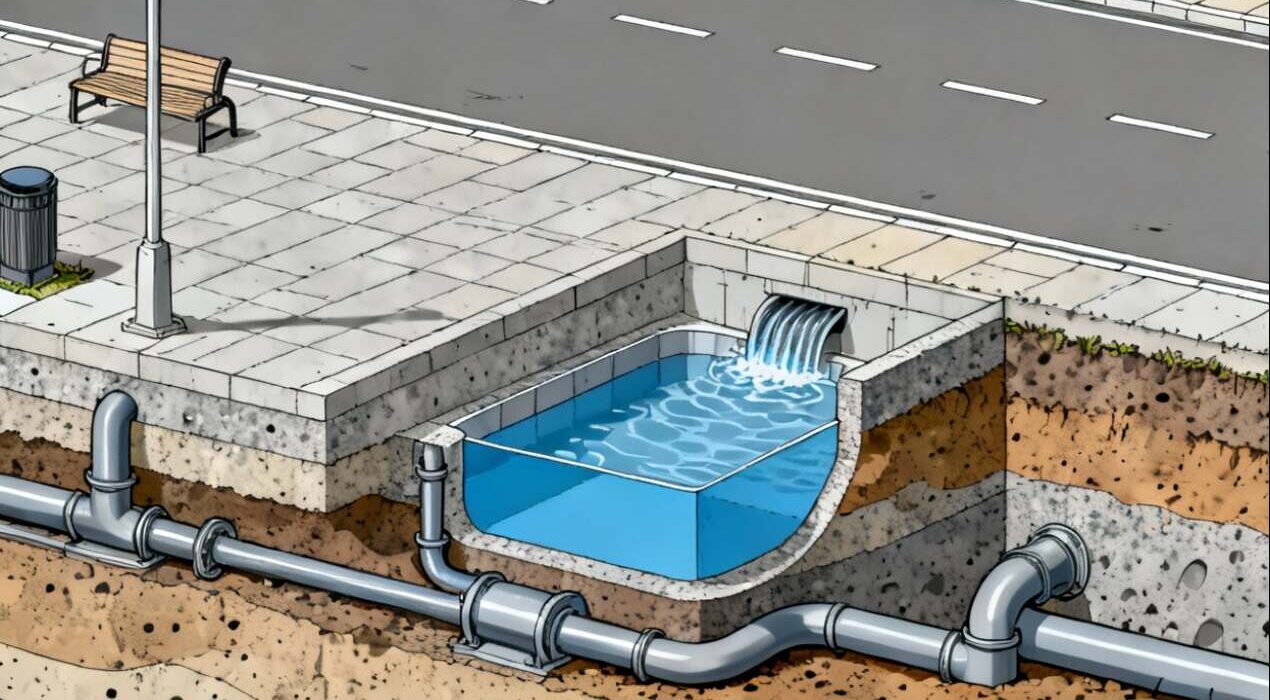
Bashir begins every project with detailed diagnostics using CCTV and mapping. Crews repair only what truly needs fixing. Where digging would disrupt traffic, he uses trenchless methods and sectional lining. He also adds modular storage tanks and controlled overflow points to reduce flood impact.
Across Pakistan’s older districts, his team stages work around markets, schools and traffic peaks. The goal is clear—improve reliability without freezing daily life. Bashir’s toolkit includes curb inlets with trash screens, flap valves to stop backflow, and detention cells under parks.
“Fix what fails first,” he says. “Don’t stop a city to make it safer.” His method builds resilience step by step—proof that Karachi’s flood solutions lie in steady, practical engineering, not in grand promises.