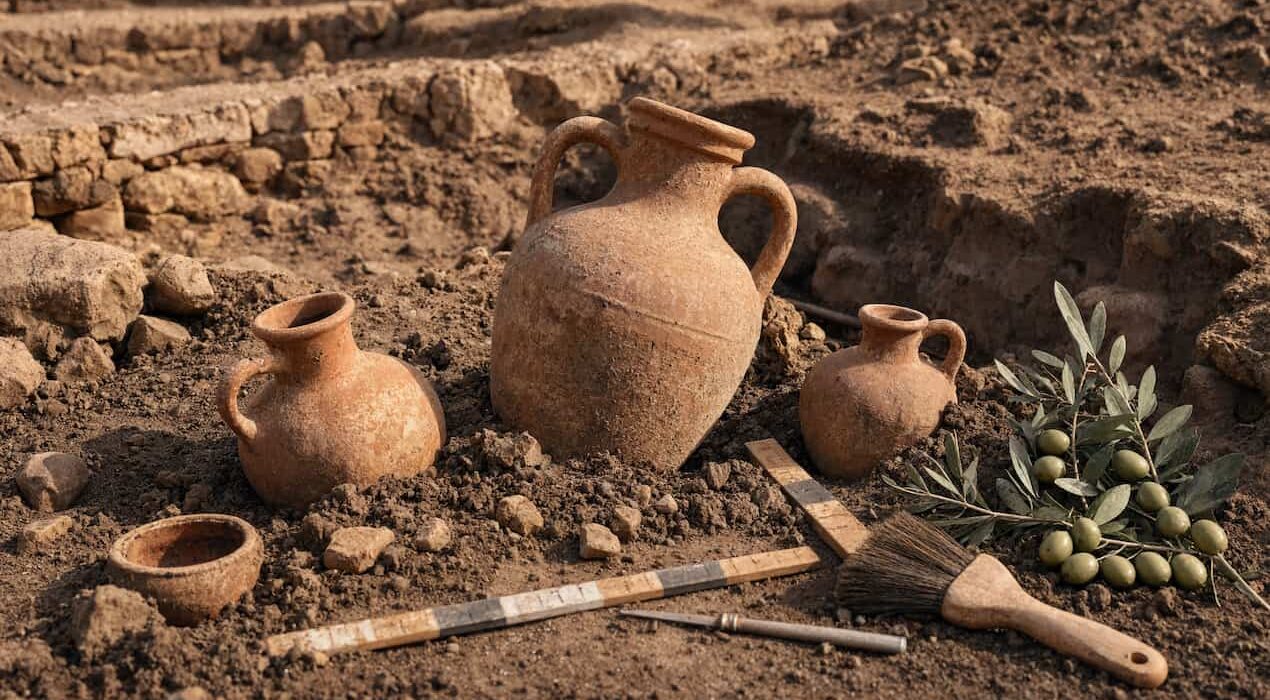
Ancient Olive Oil Evidence Questioned by New Archaeology Study
For decades, archaeologists have used chemical traces in pottery to identify ancient olive oil. However, new research suggests those conclusions may not always be correct. Scientists found that Mediterranean soil can change oil residues over time, making them difficult to identify accurately.
Researchers from Cornell University discovered that certain soils alter the chemical fingerprints of plant oils. As a result, some pottery once believed to contain olive oil may have held different plant oils or even animal fat.
Mediterranean Soil Changes Ancient Oil Residues
The research team examined how different soils affect food residues trapped inside pottery. They created terracotta samples, soaked them in olive oil, and buried them in two soil types.One soil came from New York, while the other came from Cyprus. The Cyprus soil represented the calcareous, alkaline conditions found across much of the eastern Mediterranean.
After placing the samples in heated incubators for up to one year, the researchers analyzed the remaining molecules. They discovered that the Mediterranean soil destroyed important chemical markers linked to olive oil.Therefore, the remaining residue looked very different from fresh olive oil. In some cases, it even resembled animal fat, increasing the risk of incorrect archaeological interpretations.
Study Could Change Future Archaeological Research
The findings challenge a long-held assumption that olive oil can always be identified from ancient pottery residues. Instead, scientists believe soil chemistry plays a much bigger role than previously understood.The researchers say archaeologists should test residue analysis methods more carefully before drawing historical conclusions. This approach could improve studies of ancient trade, agriculture, and everyday life throughout the Mediterranean.
The project also brought together archaeologists, engineers, chemists, and food scientists. Their collaboration created a stronger scientific method for studying ancient food remains.
Overall, the research highlights the importance of combining different scientific fields. Future discoveries may now offer a more accurate picture of how ancient civilizations produced, traded, and consumed food.