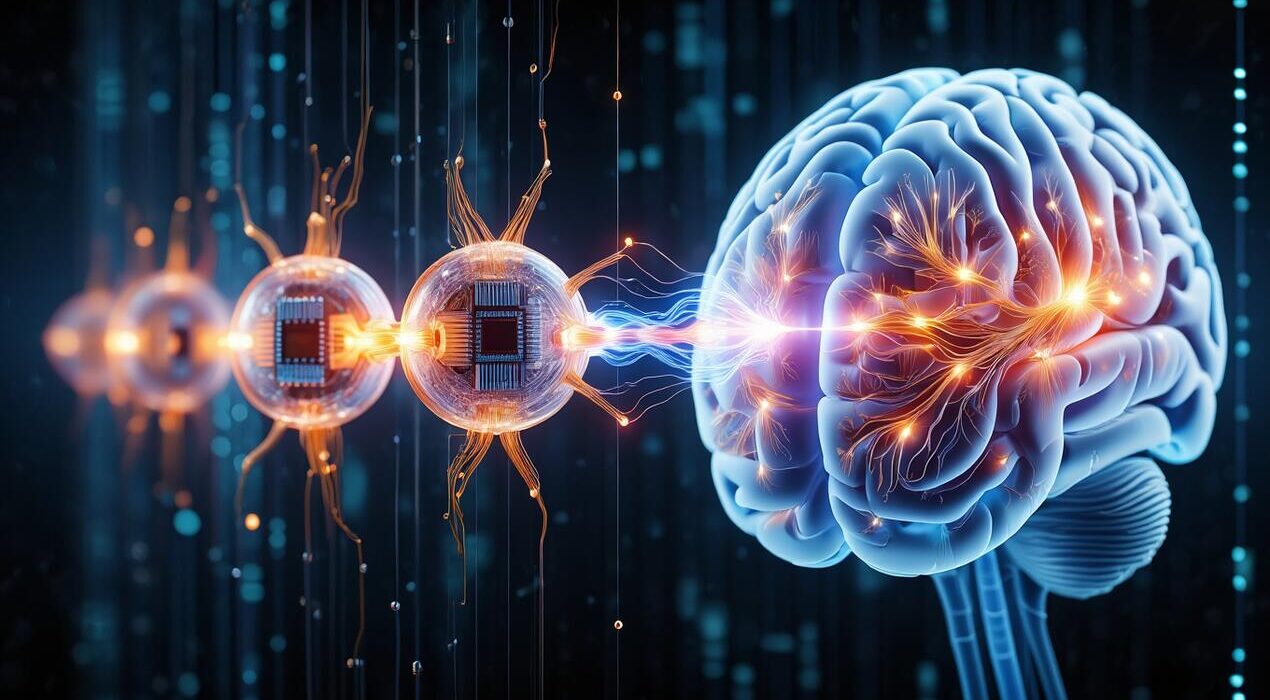
Artificial Neurons Breakthrough Lets Devices Talk to the Human Brain
Scientists have achieved an artificial neuron breakthrough that could reshape medicine and computing. They created printed neurons that can communicate with real brain cells. Engineers at Northwestern University developed these flexible devices. They are low-cost and easy to produce. In addition, they send signals similar to natural neurons.
Artificial Neurons Breakthrough Changes Brain Tech
During lab tests, the devices activated real brain cells. Researchers used mouse brain tissue for these experiments. As a result, they confirmed strong compatibility with living systems.This step brings electronics closer to the human nervous system. Therefore, it may improve brain-machine connections in the future.
This Means for AI and Healthcare
This technology could transform medical treatments. For example, it may support implants that restore vision, hearing, or movement. The breakthrough also impacts artificial intelligence. Today’s AI systems use large amounts of power. However, the brain works far more efficiently.
Scientists designed these neurons using soft materials. They used graphene and molybdenum disulfide inks. Then, they printed them onto flexible surfaces.Unlike older designs, these neurons produce complex signals. They can fire in patterns similar to real brain activity. As a result, fewer components are needed.
Researchers also tested timing and signal strength. The artificial signals matched natural neuron behavior closely. Therefore, real neurons responded effectively.
In addition, the production process reduces waste. It uses only the materials required for printing. This makes it more sustainable and cost-effective. Energy use remains a major concern for AI systems. Large data centers consume huge amounts of power and water. However, brain-inspired hardware could lower these demands. In short, this innovation bridges biology and technology. It opens new paths for smarter machines and better healthcare solutions.