Cancer Death Risk Rises With Sitting More Than 30 Minutes, Study Finds
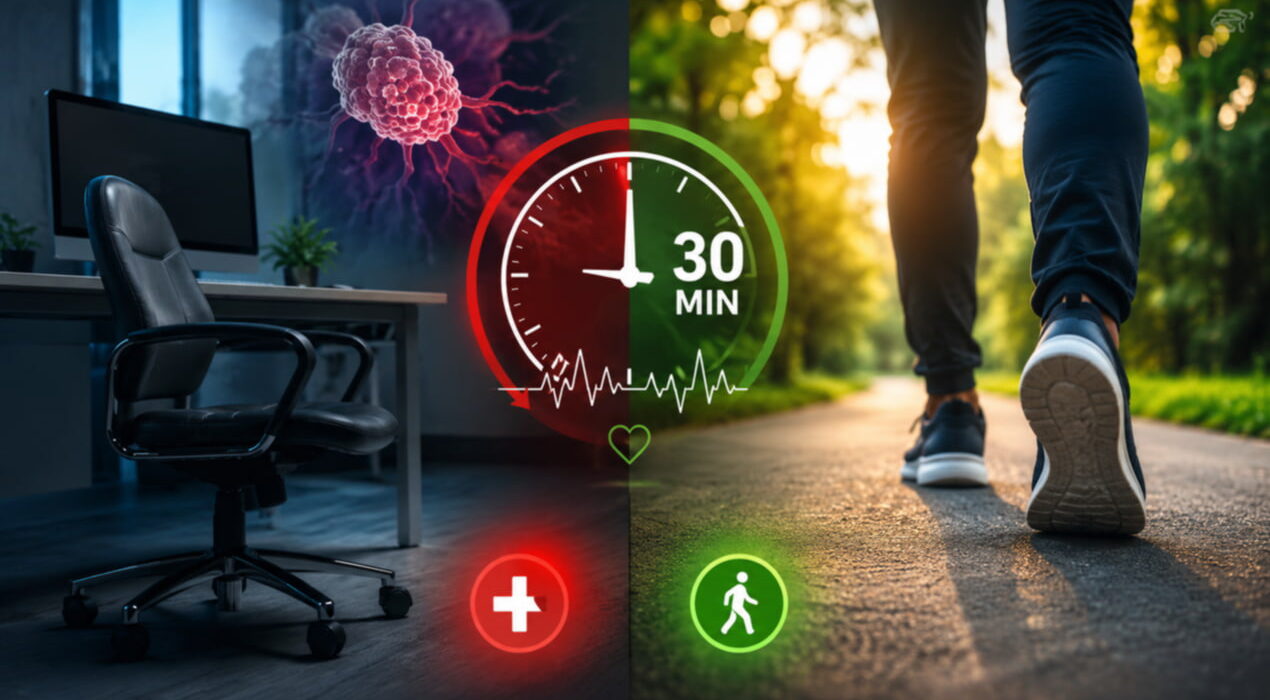
Spending more than 30 minutes sitting without a break may increase the Cancer Sitting Risk, according to a new study. However, researchers say simple movement throughout the day could lower that danger. The findings encourage people to avoid long periods of inactivity and add more light exercise to their daily routine.
Study links prolonged sitting to cancer risk
Researchers from the University of Glasgow followed more than 91,000 adults for about 12 years. Participants wore activity trackers that recorded their daily movement. The results showed that sitting or lying awake for longer than 30 minutes at a time was linked to a higher risk of dying from cancer.
In addition, every extra hour of uninterrupted sitting increased the risk by around 10%. Still, the researchers stressed that the study only found an association. It did not prove that sitting directly caused cancer deaths.
Lead researcher Dr. Frederick Ho said people should not ignore light movement. He explained that short activity breaks may protect health, even without intense exercise.
Small activity breaks make a difference
The researchers found that replacing sitting time with light activity reduced the risk. For example, walking slowly, washing dishes, or doing housework offered health benefits. Replacing one hour of sitting with light movement lowered cancer death risk by 12%.
Furthermore, replacing 30 minutes of sitting with moderate activity, such as brisk walking, reduced the risk by 8%. Even better, swapping five minutes of sitting for five minutes of vigorous exercise lowered the risk by 22%.
Experts urge regular movement
Experts believe these findings support regular movement throughout the day. Therefore, standing up every 30 minutes and taking a short walk may improve long-term health. Although more research is needed, breaking up sitting time is a simple habit that most people can adopt. As a result, adding small bursts of activity could become an easy step toward reducing future health risks.