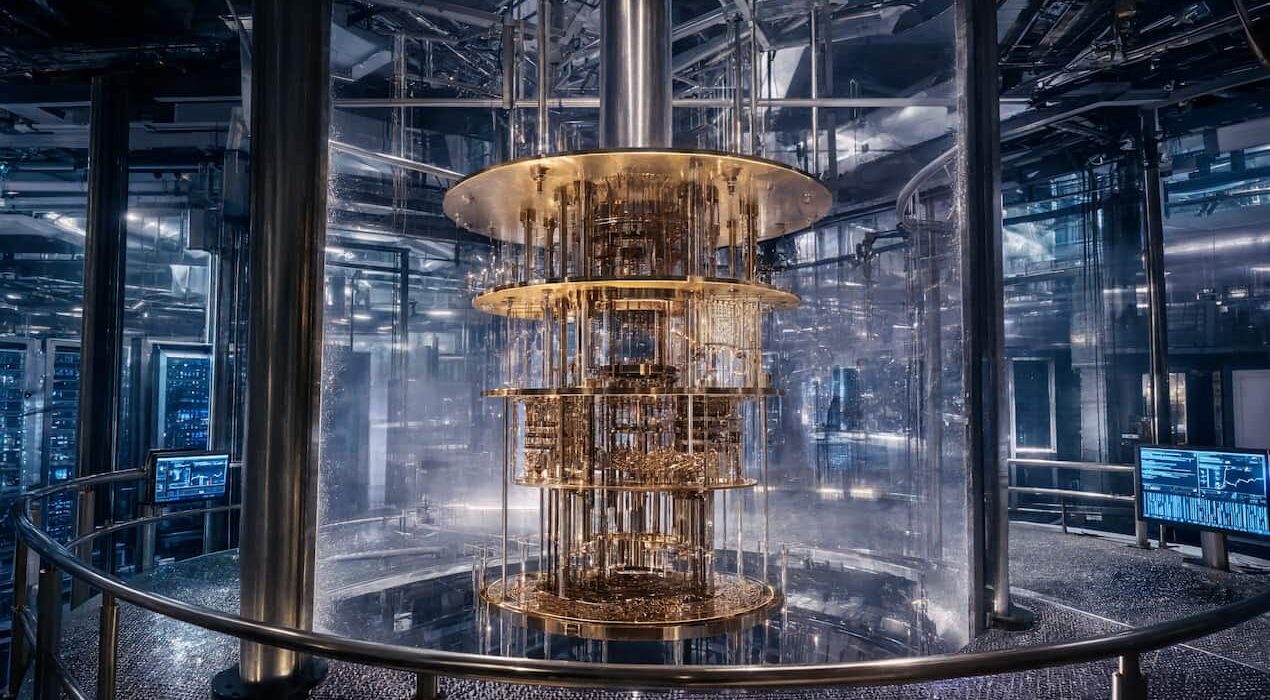
Cryogenic Brain Chip Mimics Neurons Near Absolute Zero
Researchers at The University of Hong Kong have developed a remarkable new technology. Their cryogenic brain chip can operate at temperatures close to absolute zero. The innovation could support future quantum computers and deep-space missions.
Quantum computers require extremely cold environments to function properly. However, traditional control electronics generate heat and consume significant energy. As a result, engineers face major challenges when building larger quantum systems.
The research team found a way to overcome this problem. They created a brain-inspired hardware platform using Silicon Carbide, also known as SiC. This material already plays an important role in modern power electronics.
A Transistor That Acts Like a Neuron
The team discovered a new method for controlling a phenomenon called negative differential resistance. Using this effect, they enabled a single transistor to produce neuron-like electrical spikes.
These spikes closely resemble signals used by biological brain cells. Furthermore, the transistor maintained this behavior at temperatures as low as 10 millikelvin. That temperature sits just above absolute zero.
Unlike many electronic processes, the effect does not rely on heat. Instead, it comes from the atomic structure of Silicon Carbide. Therefore, the behavior remains stable and repeatable.
Researchers believe this approach offers significant advantages. The circuits could consume thousands of times less energy than conventional electronics. Consequently, they may reduce the heat burden inside quantum computing systems.
Benefits for Quantum Computing and Space Exploration
The study also demonstrated that these artificial neurons can connect into larger networks. This capability could support advanced quantum error correction and real-time system control. Another advantage comes from manufacturing. Silicon Carbide already has widespread industrial use. Therefore, companies can potentially produce these chips using existing fabrication facilities.
The technology may also benefit future space missions. Many spacecraft operate in extremely cold environments far from the Sun. Because these circuits function reliably in deep-freeze conditions, they could power scientific instruments and onboard computing systems.
This breakthrough highlights how brain-inspired electronics may help solve complex engineering challenges. In the future, cryogenic hardware could play a vital role in both quantum computing and deep-space exploration.