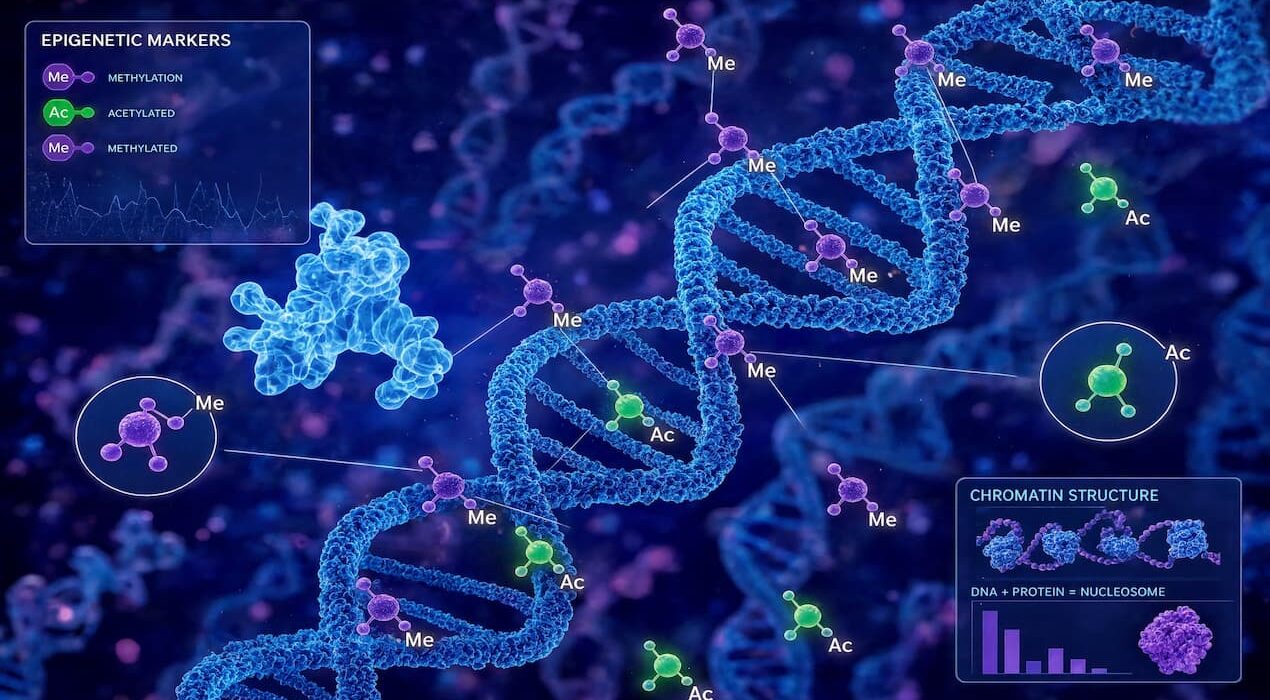
Epigenetic Inheritance Discovery Challenges Traditional Genetics
For more than 100 years, scientists have relied on Mendel’s laws to explain inheritance. However, a new study suggests that heredity is more complex. Researchers found that some traits can pass between generations without following traditional genetic rules. The study examined how chemical markers influence gene activity. These markers do not change DNA itself. Instead, they affect how genes switch on or off. Scientists call these changes epigenetic modifications.
Inheritance Beyond DNA
Researchers analyzed three generations of mice to track DNA methylation patterns. DNA methylation is a common epigenetic process that helps control gene activity. The team compared genetic information with inherited methylation changes.
Results showed that about 7% of inheritance patterns did not follow Mendelian expectations. In several cases, offspring displayed methylation patterns that neither parent carried. As a result, researchers observed inheritance events that seemed to appear unexpectedly.
Scientists also identified new examples of genomic imprinting. In these cases, gene activity depends on whether a gene comes from the mother or father. Therefore, inheritance may depend on more than dominant or recessive genes.The study revealed another surprising finding called paramutation. This process allows one gene copy to influence another through epigenetic changes. Previously, researchers mainly observed this phenomenon in plants and fruit flies.
What the Findings Mean
The discovery suggests that environmental factors may play a larger role in inheritance. Earlier studies linked epigenetic changes to stress, diet, and other life experiences. Consequently, some inherited traits may respond more quickly to environmental conditions than DNA mutations. Researchers believe these findings could improve our understanding of health and disease. Scientists may need to examine both genetic and epigenetic information when studying inherited conditions.
Advanced long-read DNA sequencing helped researchers uncover these patterns. The technology allowed them to analyze large DNA regions and detect subtle methylation changes. Future studies will explore whether similar inheritance patterns occur in humans. If confirmed, the research could reshape how scientists understand heredity. It may also provide new insights into disease risk, fertility, and the long-term effects of environmental influences across generations.