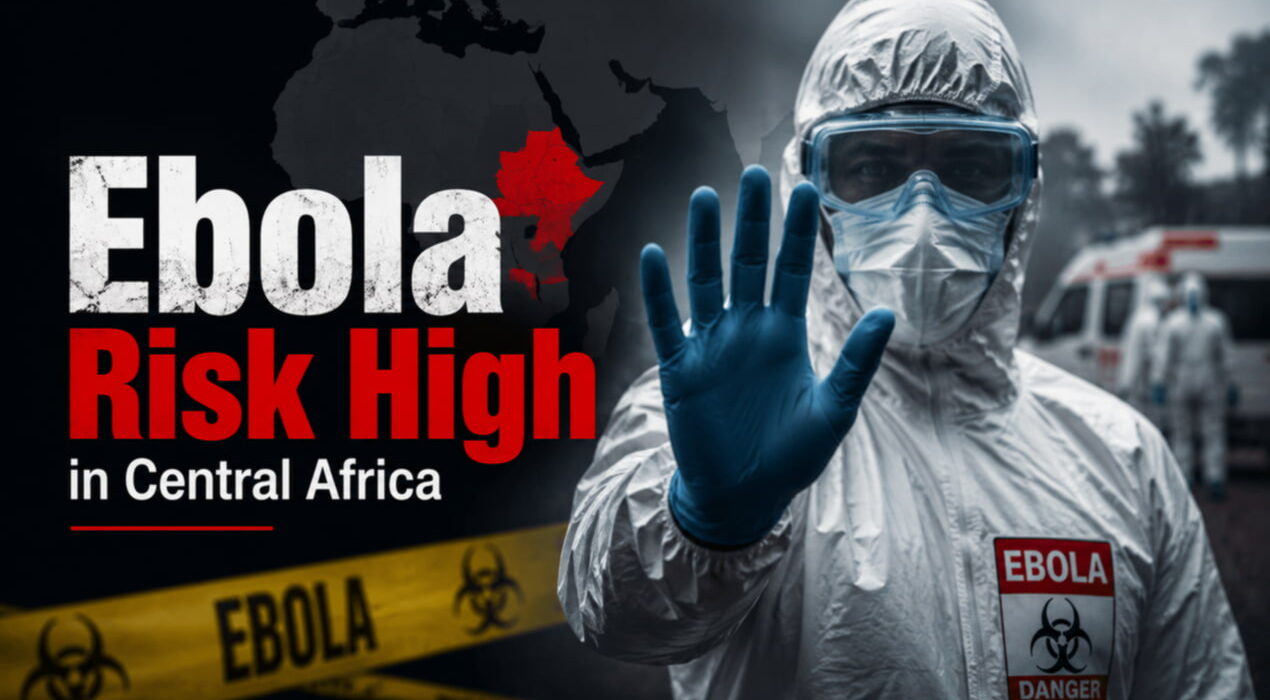
Ebola Risk High in Central Africa as WHO Monitors Growing Outbreak
Health officials warned that the Ebola risk remains high across Central Africa, although the global threat is still low. The World Health Organisation said the virus likely spread for months before authorities detected the outbreak in eastern Democratic Republic of Congo. So far, officials suspect around 600 cases and 139 deaths linked to the outbreak.
Rising concern in affected regions
WHO chief Tedros Adhanom Ghebreyesus said health teams expect the number of cases to rise further. In addition, experts believe the outbreak started several months ago in remote areas of Ituri province. Medical workers in Bunia have only recently received protective equipment and isolation supplies.
Local volunteers also described difficult conditions in affected communities. Many people buried victims without gloves or proper safety measures. Therefore, health officials fear the virus may continue spreading in conflict-hit regions where healthcare access remains limited and public awareness stays low.
No vaccine for current strain
The current outbreak involves the rare Bundibugyo strain of Ebola. Unlike the common Zaire strain, this version does not respond to standard testing methods. In addition, no approved vaccine or specific treatment currently exists for Bundibugyo infections.
WHO officials said their main goal is to break the transmission chain quickly. Teams continue contact tracing, patient isolation, and emergency medical care across affected districts. Researchers are also reviewing whether experimental vaccines or treatments could help contain the outbreak safely.
Travel warnings and global response
Confirmed Ebola cases have appeared in eastern Congo and Uganda’s capital, Kampala. One infected American doctor has also received treatment in Germany. However, European officials said the infection risk inside the European Union remains very low.
WHO advised confirmed patients and close contacts not to travel internationally. As a result, health agencies continue monitoring borders and strengthening emergency response systems. Communities must remain careful during outbreaks.