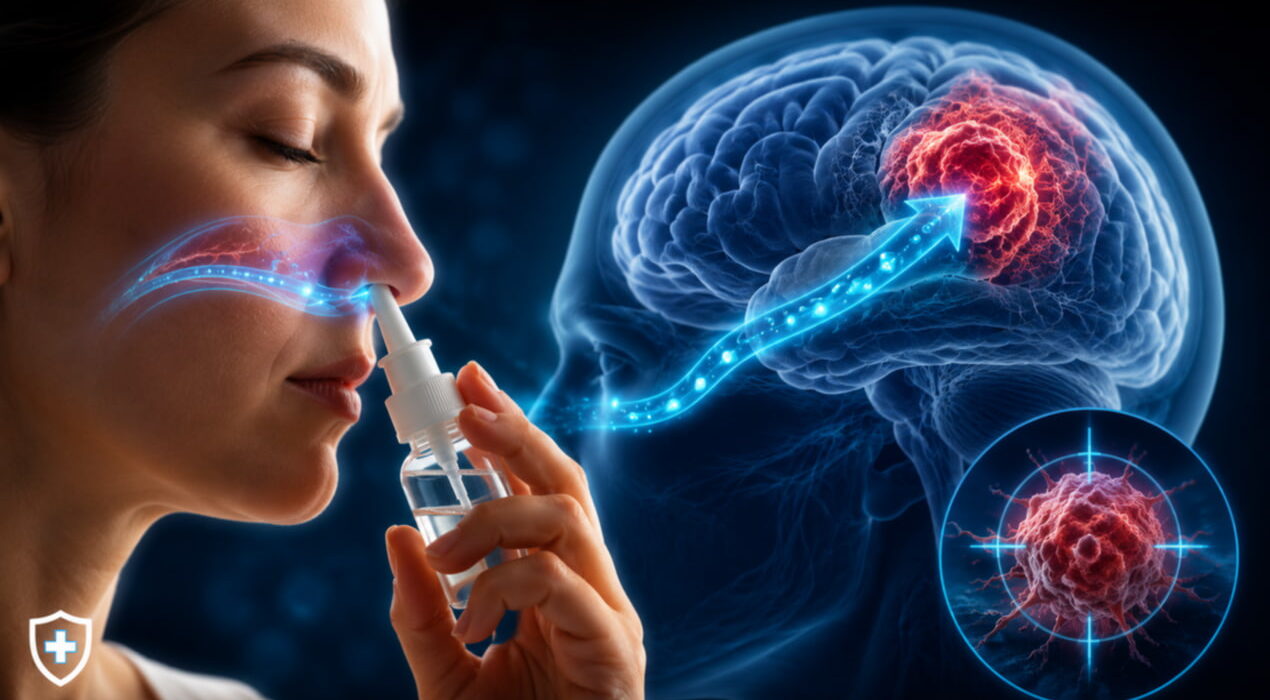
New Nasal Spray Therapy Shows Promise Against Glioblastoma Brain Cancer
Glioblastoma is one of the most aggressive and deadly forms of brain cancer, largely because treatments struggle to penetrate the brain’s protective blood-brain barrier. Researchers from Washington University in St. Louis and collaborators in Japan have developed a new nasal spray-like therapy that could offer a noninvasive way to fight these tumors. Instead of surgery or injections, the treatment uses the nasal pathway to deliver immune-activating molecules directly into the brain. Scientists believe this approach could help the immune system recognize and attack cancer cells more effectively while avoiding some of the limitations of current therapies.
A New Way to Reach Brain Tumors
The experimental treatment is built around STING-activating compounds engineered into nanoparticle structures called spherical nucleic acids. These tiny particles are stabilized around gold cores, helping protect the molecules from breaking down before they reach the brain. By using the nasal route, researchers were able to bypass the blood-brain barrier, which often blocks drugs from reaching brain tumors. The therapy is designed not only to deliver medicine effectively but also to stimulate a stronger immune response against glioblastoma cells inside the brain.
Encouraging Results in Animal Studies
In mouse studies published in the Proceedings of the National Academy of Sciences in 2025, the therapy showed promising results. The treatment activated immune cells, slowed tumor growth, and improved the body’s ability to target cancerous tissue. Researchers say the approach may eventually be combined with existing immunotherapy drugs to increase treatment effectiveness. The findings suggest that noninvasive delivery systems could become an important tool in future brain cancer therapies.
Human Trials Still Needed
Despite the positive results, the treatment remains at an early experimental stage. So far, the therapy has only been tested in animals, and human clinical trials will be necessary before any medical use becomes possible. Scientists remain hopeful that the technology could eventually lead to safer and more effective treatments for glioblastoma and other difficult brain diseases.