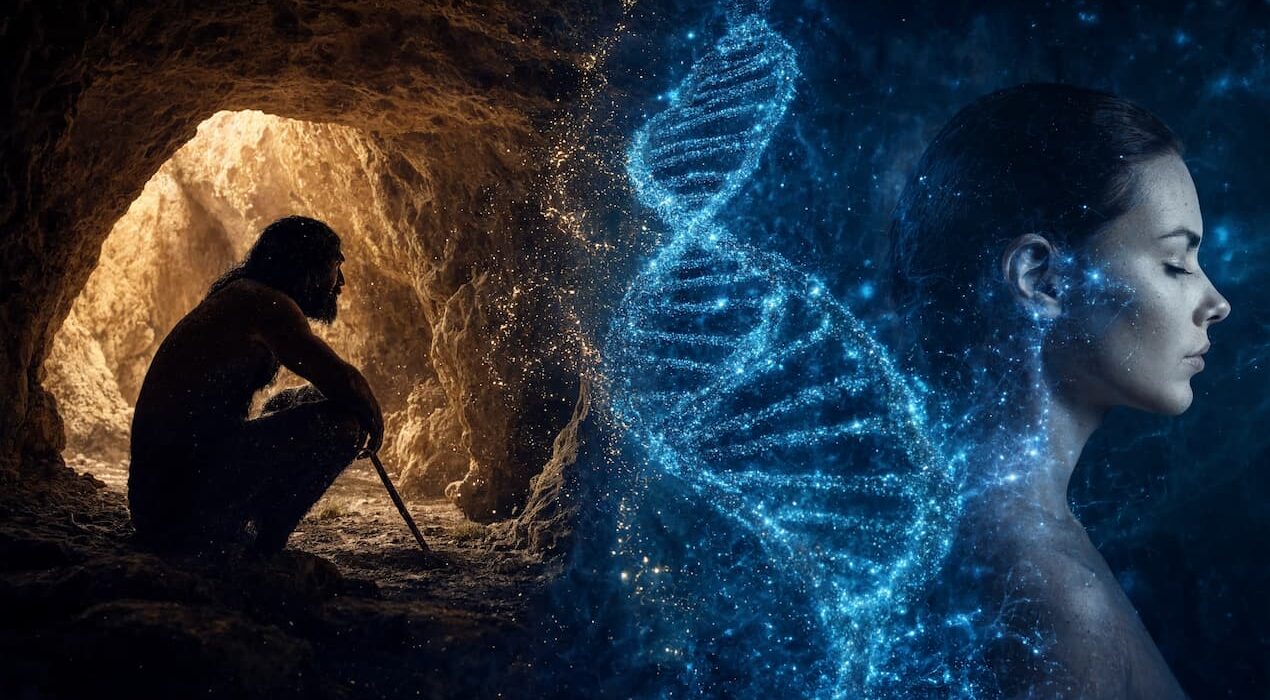
Lost Human Lineage May Still Shape Modern DNA
A lost human lineage may still influence people living today. Scientists found new molecular evidence in ancient teeth from Homo erectus. The discovery suggests ancient humans exchanged genes more often than researchers once believed. For decades, experts viewed human evolution as a simple family tree. However, new research reveals a far more connected history. Ancient human groups likely met, mixed, and shared genetic traits across thousands of years.
Ancient Proteins Reveal Hidden Connections
Researchers studied proteins preserved inside tooth enamel instead of ancient DNA. Tooth enamel survives much longer than DNA, making it valuable for studying older fossils. The team examined six teeth from Chinese archaeological sites dating back about 400,000 years. Scientists discovered a unique protein marker shared by all the Homo erectus samples. They also found another marker linked to Denisovans, an extinct human group. This finding suggests the two populations likely interbred in East Asia. Later, Denisovans passed some of those genetic traits to the ancestors of modern people. Today, scientists still detect this genetic signature in parts of Southeast Asia, Papua New Guinea, and the Philippines. Researchers believe this process, called introgression, helped ancient humans exchange useful genetic traits. Therefore, human evolution involved repeated contact instead of complete separation.
A New View of Human Evolution
The findings support growing evidence that ancient human groups mixed frequently. Modern people outside Africa already carry Neanderthal DNA. Likewise, many Oceanian populations also inherited Denisovan ancestry. Scientists now describe human evolution as a network instead of a simple tree. Different human groups crossed paths, shared genes, and adapted together over time. As research tools improve, more hidden connections may emerge from ancient fossils. Future studies could examine other extinct species, including Homo floresiensis and Homo luzonensis. These discoveries may reveal additional genetic links to living humans. As a result, our evolutionary story continues to grow more detailed and fascinating.