Magnetic Fields Shape Hot Exoplanets
Astronomers have revealed that hot exoplanets possess strong magnetic fields. These findings may help explain planetary habitability.
Winds and Magnetism
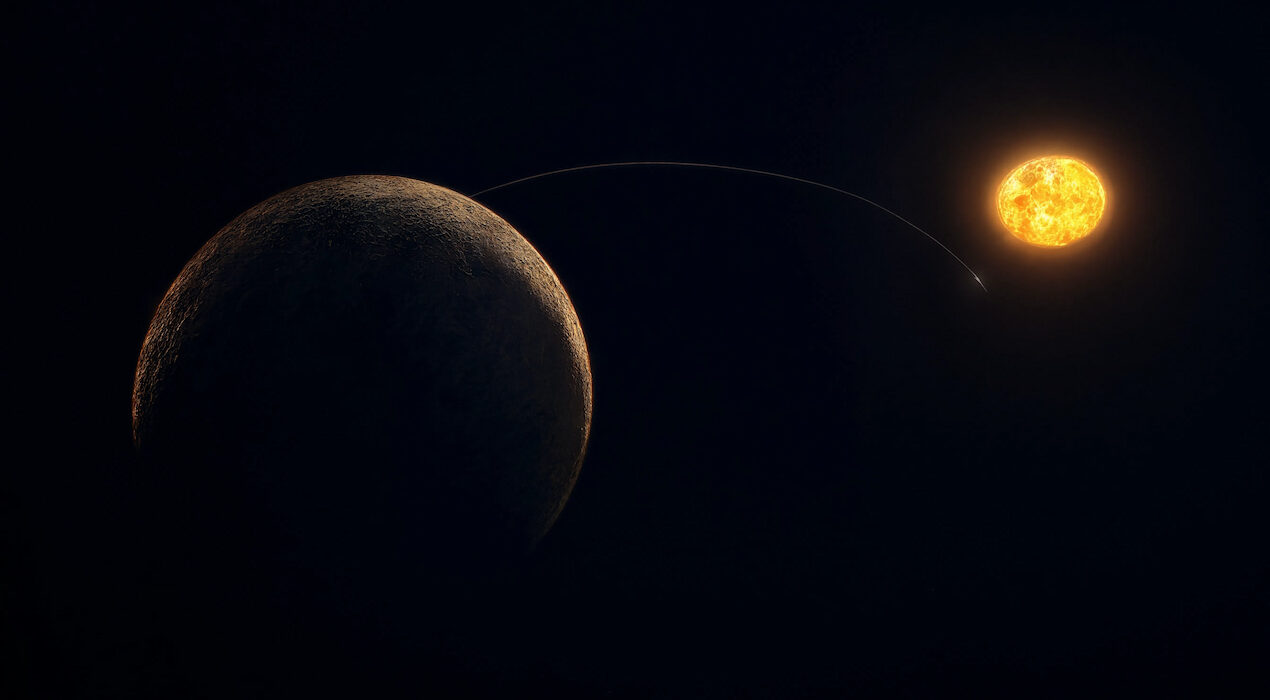
Researchers studied seven ultra‑hot Jupiter’s. Each planet orbits close to its star and remains tidally locked. As a result, one side stays scorching hot while the other side remains cold. This extreme contrast drives powerful winds. Speeds reached up to 25,000 kilometers per hour. For comparison, Jupiter’s fastest winds reach only 1,500 kilometers per hour. However, hotter planets showed slower winds. This surprising trend suggested another force was at work.
Measuring Magnetic Fields
The team used instruments at Gemini North in Hawaiʻi and ESO’s Very Large Telescope in Chile. They tracked chemical signatures moving through planetary atmospheres.
By comparing wind speeds with temperatures, they estimated magnetic field strength. Results showed fields four times stronger than Saturn’s and half as strong as Jupiter’s. These magnetic fields act like brakes. They slow charged particles and reduce wind speeds.
Why It Matters
Earth’s magnetic field protects its atmosphere from radiation. Without it, water and life would struggle to survive. Therefore, measuring magnetism on distant planets is a key step toward understanding habitability. Strong fields may also create auroras. Just as Earth’s northern lights glow, hot exoplanets could display even more spectacular colors.
The Takeaway
Magnetic fields shape the atmospheres of hot exoplanets. They slow extreme winds and may protect planetary environments. This breakthrough opens a new window into the search for habitable worlds.