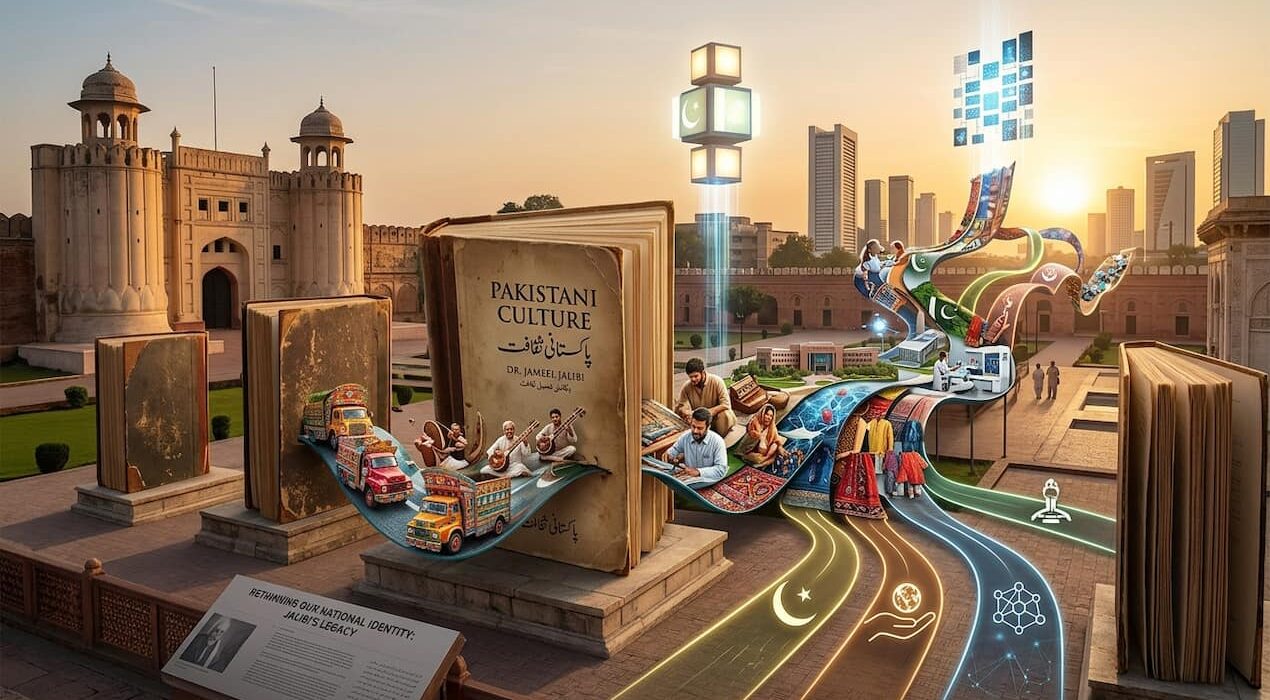
Pakistani Culture Jameel Jalibi: A Timeless National Guide
Recently, I spoke at an event highlighting Dr Jameel Jalibi’s landmark book on Pakistani culture. First published in 1964, this powerful work still asks our society several uncomfortable questions. As a student in the 1980s, I always viewed Jalibi as an intellectual giant. Although my own career path led to physics, rereading his writing reminded me that great books constantly challenge every new generation.
Culture and the Classroom
Jalibi strongly argued that culture means much more than traditional food, dress, or folklore. Instead, he defined culture as a nation’s shared moral vocabulary and collective values. For instance, our culture shows up in how we govern, educate, and treat each other. Consequently, our main national challenge involves building a shared civic identity while respecting our rich diversity.
Furthermore, Jalibi believed that true national identity begins directly inside the classroom. Schools must encourage critical thinking instead of simple memorization. As a university teacher, I also believe education should produce thoughtful citizens. Therefore, our classrooms must favor open dialogue over rigid dogma to build lasting public trust.
Technology Needs Moral Direction
As a physicist, I find his insights on progress especially powerful. Modern tools like artificial intelligence and nuclear science grant us immense capability. However, technology alone cannot teach us how to use that power responsibly. For example, a society can advance technologically while still remaining morally poor. Thus, material progress requires intellectual freedom and ethical direction.
Today, Pakistan faces digital challenges that Jalibi could never have imagined. Yet, his core argument remains entirely unchanged. Nations survive through shared values and strong institutions rather than mere economic indicators. Ultimately, his work offers a timeless invitation to reflect on true nationhood.