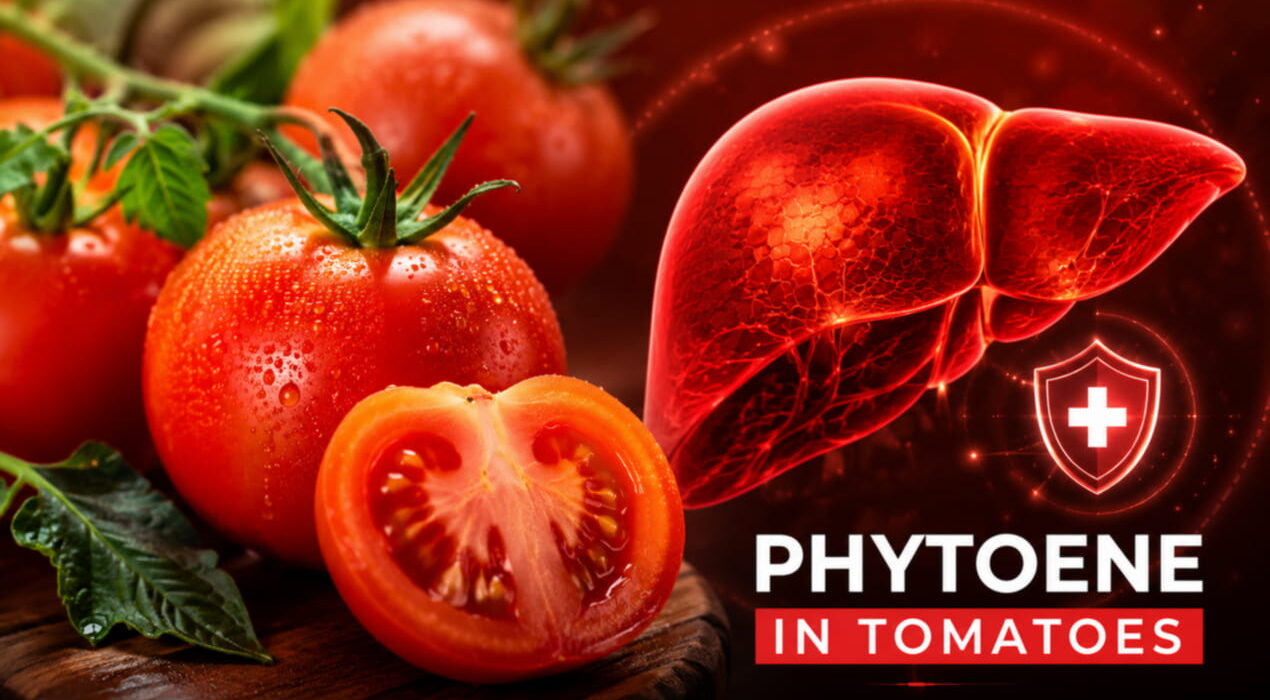
Phytoene in Tomatoes May Help Protect Against Fatty Liver
Phytoene in tomatoes may help protect against fatty liver disease, according to new animal research. Mice given the compound developed substantially less liver fat than those on the same unhealthy diet.
Phytoene is a natural plant compound. Plants use it to make lycopene and other carotenoids. These pigments give many fruits and vegetables their red, yellow, and orange colors.
Metabolic dysfunction-associated steatotic liver disease affects millions of adults. In the United States, estimates suggest up to 100 million adults may have the condition. Rates can also reach 75% among people with obesity or diabetes.
How Fatty Liver Develops
The condition occurs when excess fat builds up inside liver cells. Over time, this buildup can trigger inflammation and liver damage.
In advanced cases, continued damage can cause cirrhosis. This creates permanent scarring and can seriously affect liver function.
Scientists have studied tomatoes and liver health for years. Previous animal research found that tomato powder protected the liver better than purified lycopene.
Therefore, researchers believe tomatoes may contain several compounds that support liver health. Both lycopene and phytoene occur naturally in tomatoes and tomato products.
What the Study Found
Researchers fed two groups of mice a refined-carbohydrate diet for six months. The diet aimed to mimic eating patterns linked with fatty liver disease.
Half of the mice also received phytoene supplements. The amount matched roughly three to four medium raw tomatoes daily. It also matched about 100 grams of tomato paste.
The supplemented mice developed substantially less fatty liver disease. However, the findings come from mice, so they cannot yet confirm the same effect in humans.
Na Youn Lee, the study’s lead author, said phytoene may be absorbed more easily than lycopene. The research suggests this compound deserves further study.
For now, tomatoes can remain part of a balanced diet. However, people should not use tomato products as a treatment for fatty liver disease.
More human research is needed to determine whether phytoene can prevent or reduce liver fat in people. Healthy eating and regular physical activity remain important for liver health.