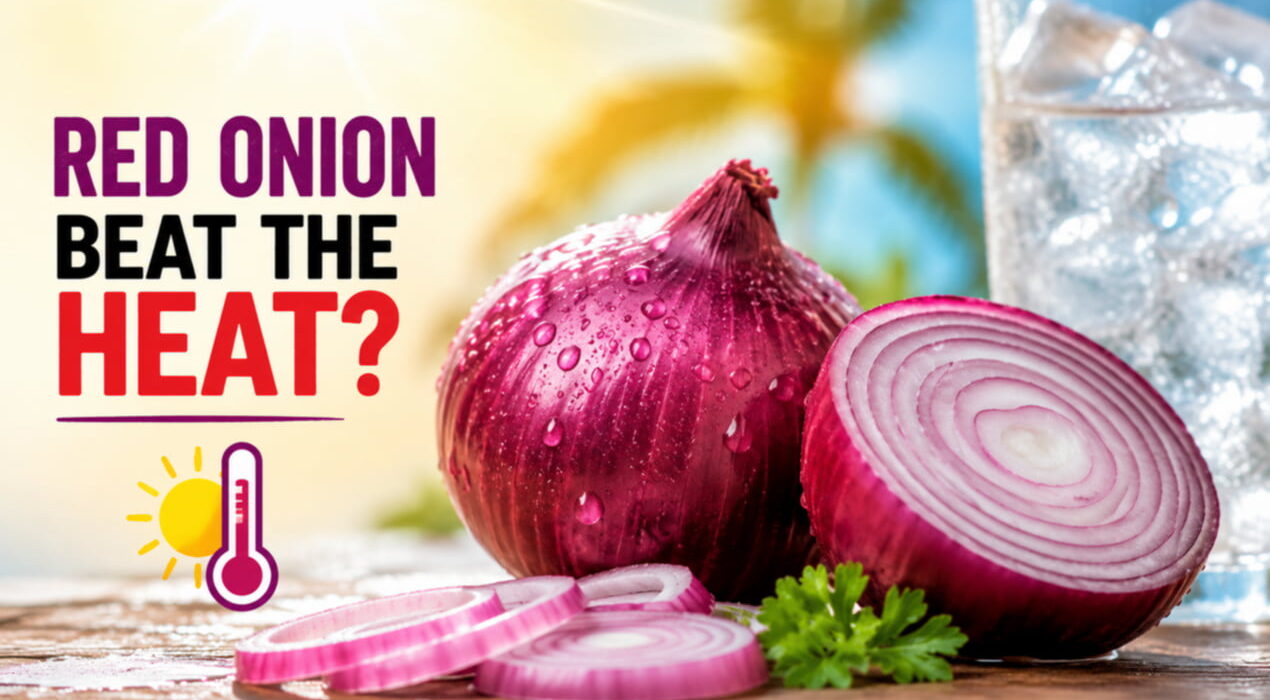
Red Onion Summer Benefits: Can They Help Beat Extreme Heat?
As temperatures continue to climb, nutritionists are encouraging people to add red onions to their summer meals. Experts say red onions may help the body handle heat stress better than white or pink onions. They contain water, antioxidants, minerals, and flavonoids that support hydration during extreme weather. In addition, doctors say these nutrients may help the body recover lost fluids and salts caused by excessive sweating.
Cooling support during summer
Health experts explain that rising temperatures often trigger headaches, dizziness, nausea, weakness, and dehydration. Red onions may help reduce some of these symptoms because they naturally contain cooling and hydrating properties. Nutritionists also believe the vegetable supports digestion and helps maintain water balance during hot days.
Many people prefer eating raw red onions with salads or yogurt meals in summer. Experts say this habit may reduce bloating and improve intestinal health. In addition, natural compounds found in red onions may support healthy blood circulation during heatwaves. Some studies also suggest these compounds help reduce pressure on the body caused by intense heat exposure.
Best ways to consume red onions
Doctors recommend adding sliced red onions to salads, raita, sandwiches, and homemade sauces. Pairing onions with cooling foods may improve comfort during hot weather. However, experts advise people to avoid depending only on onions for protection against heatstroke.
Experts advise moderation
Nutritionists warn that excessive onion intake may trigger acidity or stomach discomfort in sensitive people. Therefore, people with digestive or intestinal issues should eat them carefully. Experts stress that water, healthy meals, and limited sun exposure remain the best ways to stay safe during severe summer heat. They also encourage families to drink enough water, wear light clothing, and avoid outdoor activities during peak afternoon hours, because prevention remains more effective than treating heat-related illness during emergencies