Saudi Education Curriculum Presents Khyber as Peace Example
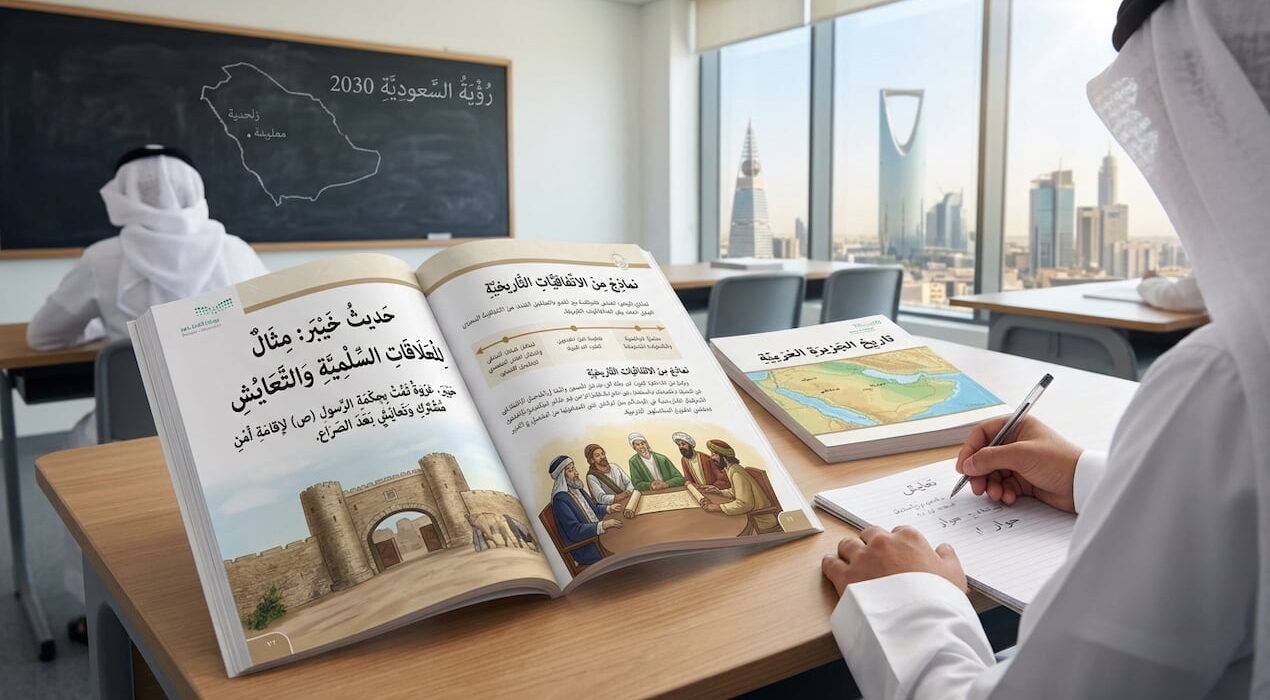
Saudi Arabia’s Grade 11 Islamic Studies textbook presents the Conquest of Khyber as an example of peace with Jews. The example appears alongside agreements involving Christians and Arab tribes.A newly released review of Saudi Arabia’s education curriculum highlighted the content. The review was seen by ProPakistani.
The textbook lists several “Prophetic Agreements and Contracts” in its lessons. These include the Contract of Medina and the Agreement of Hudaybiyyah.Other examples include agreements with Banu Damra, Juhayna and Bani Madlig. The list also mentions the Peace of Najran, Hilf al-Fudul, Aqaba and Khyber.
Textbook Highlights Coexistence
The textbook identifies several purposes behind these agreements. These include building partnerships among different religions and cultures.It also highlights protecting common interests and promoting peaceful coexistence. Therefore, the lesson presents dialogue and cooperation as important social values.The inclusion of Khyber has attracted attention because of its historical context. The event involved a Muslim victory after a siege of the fortified settlement.
Historical accounts also describe the surrender of Khyber’s inhabitants. However, the textbook places the event within a broader discussion about agreements and peaceful relations.The curriculum review also highlights lessons beyond Islamic Studies. Saudi Arabia’s Grade 10 Critical Thinking textbook promotes dialogue and coexistence.The lesson describes dialogue as a fundamental human need. It also encourages students to study different cultures and develop mutual understanding.
Curriculum Promotes Dialogue
Another lesson encourages communication between Saudis and other societies. It highlights shared cultural values and areas of common ground.Meanwhile, a Grade 11 Islamic Studies lesson refers to a hadith about peaceful relations. The lesson connects such relations with social coexistence.These examples show a broader focus on dialogue within the reviewed curriculum. They also place cooperation among different communities at the centre of several lessons.
The curriculum’s approach gives students examples of cultural interaction and peaceful relations. It also encourages understanding between communities with different backgrounds.As Saudi Arabia continues education reforms, such lessons could shape how young students view dialogue. They may also influence discussions about cultural diversity and coexistence.