Smart Hydrogel Dressing Releases Antibiotics Only When Harmful Bacteria Are Detected
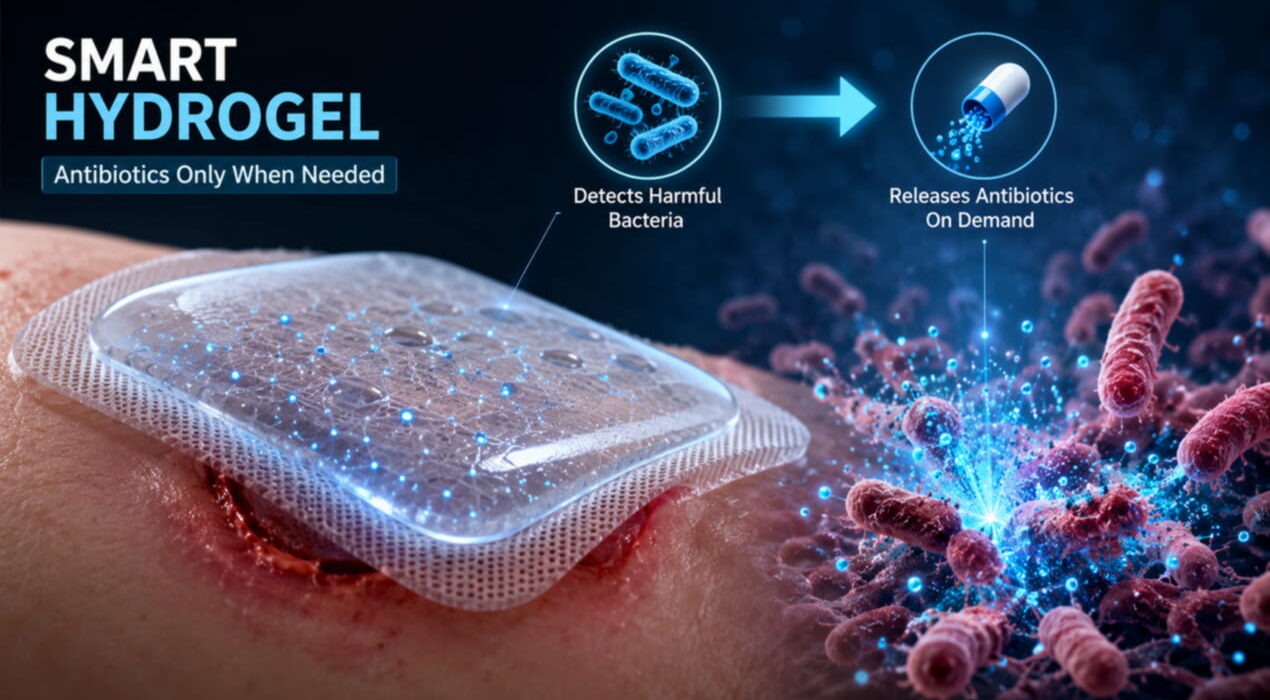
A new Smart Hydrogel Dressing developed by researchers at Brown University could change how doctors treat wound infections. The innovative material detects harmful bacteria and releases antibiotics only when they are needed. As a result, it may help patients heal faster while reducing unnecessary antibiotic exposure.
Scientists created the dressing using a hydrogel, a soft material made mostly of water and polymers. The hydrogel stores antibiotics and remains stable when no infection is present. However, it reacts when harmful bacteria enter a wound. This targeted approach may help slow the rise of antibiotic-resistant infections, which continue to threaten global health.
How the Smart Material Detects Infection
The hydrogel contains special crosslinkers that respond to beta-lactamase enzymes. Many infection-causing bacteria naturally produce these enzymes. When the enzymes appear, the crosslinkers break apart and trigger the release of antibiotics.
Laboratory tests showed promising results. The hydrogel broke down only when exposed to harmful bacteria. In contrast, it remained intact around harmless bacteria that do not produce beta-lactamase enzymes. Therefore, the treatment avoids exposing healthy skin microbes to unnecessary antibiotics.
Promising Results in Early Testing
Researchers also found that the hydrogel securely holds its antibiotic supply until activation occurs. The medication stays trapped inside the material and does not leak during normal conditions. Consequently, treatment remains highly targeted and efficient.
In mouse studies, a single application completely cleared bacterial infections from abrasion wounds. In addition, the dressing outperformed a commonly used antimicrobial wound treatment. Scientists observed better infection control and improved wound healing.
Potential Impact on Future Healthcare
Experts believe this technology could offer a powerful tool against antibiotic resistance. By limiting antibiotic use to infected wounds, the dressing reduces opportunities for resistant bacteria to develop.
The research team has patented the material and continues further development. If future studies confirm these findings, the Smart Hydrogel Dressing could become an important advancement in modern wound care worldwide.