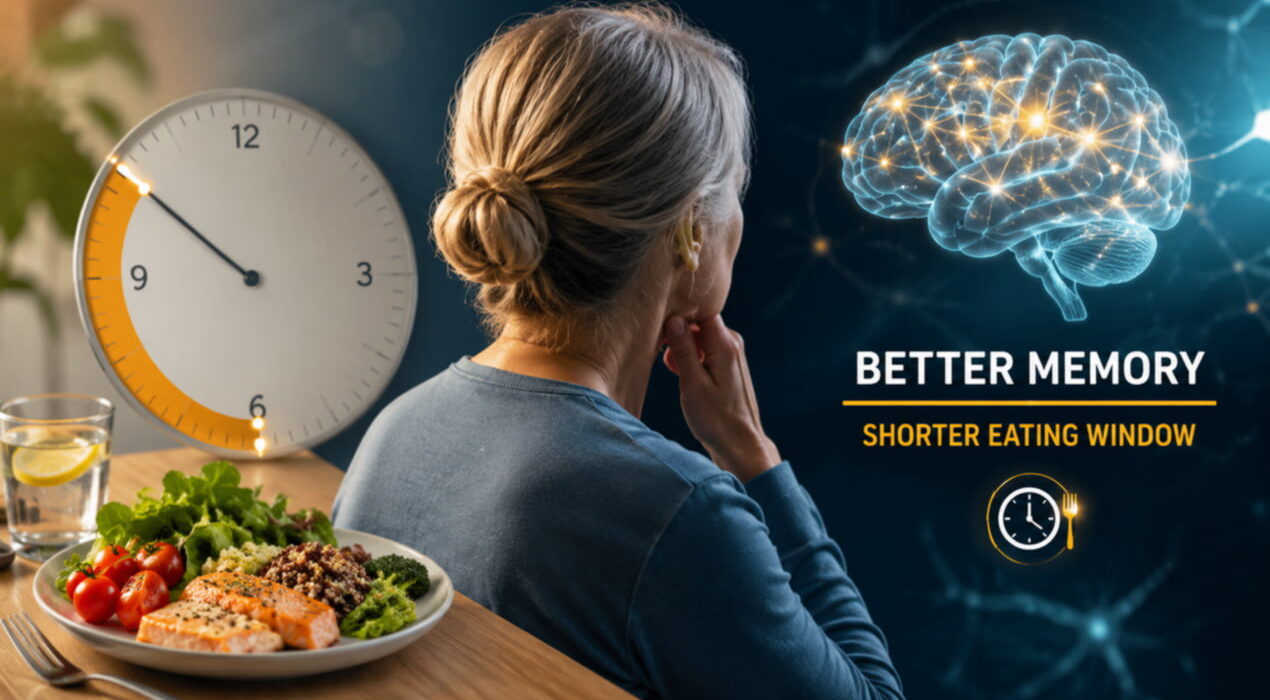
Time-Restricted Eating Linked to Better Memory in Older Women
A six-month study suggests time-restricted eating may support memory and problem-solving in older women. Researchers presented findings at Nutrition 2026, the American Society for Nutrition’s conference.
The pilot study included 47 women aged 50 to 79. All had gone through menopause and were overweight or living with obesity. They also reduced daily calorie intake by about 500 calories.
Shorter Eating Window Shows Benefits
Researchers placed participants into two groups. One group ate within an average 8.2-hour window, usually from 10am to 6pm. The other spread meals across about 12.3 hours.
Both groups lost around 15 pounds during the study. However, the shorter-window group performed better on some cognitive tests.
These women showed stronger spatial planning and problem-solving skills. They also made fewer mistakes during memory tests. However, researchers found no major differences in reaction speed or multitasking.
Dr Sue Shapses of Rutgers University led the research.
Why Meal Timing May Matter
Researchers are exploring links between meal timing, metabolism and brain health. A longer overnight fasting period may improve insulin sensitivity and reduce inflammation.
It may also support cellular repair. Therefore, researchers believe these changes could benefit brain health.
Experts say the study stands out because it considers when people eat, not only food quantity. Still, the findings remain preliminary.
Experts Urge Caution
Time-restricted eating should not replace proven habits that protect brain health. Regular exercise, enough sleep, healthy blood pressure and blood sugar remain important.
A balanced Mediterranean-style diet also has stronger evidence for aging in older adults. In addition, fasting may not suit everyone.
People with eating disorders need caution. Those who use insulin for diabetes should seek medical advice before changing eating schedules.
Researchers say larger studies are needed to confirm the results. Future research must determine whether shorter eating periods directly improve cognitive health.