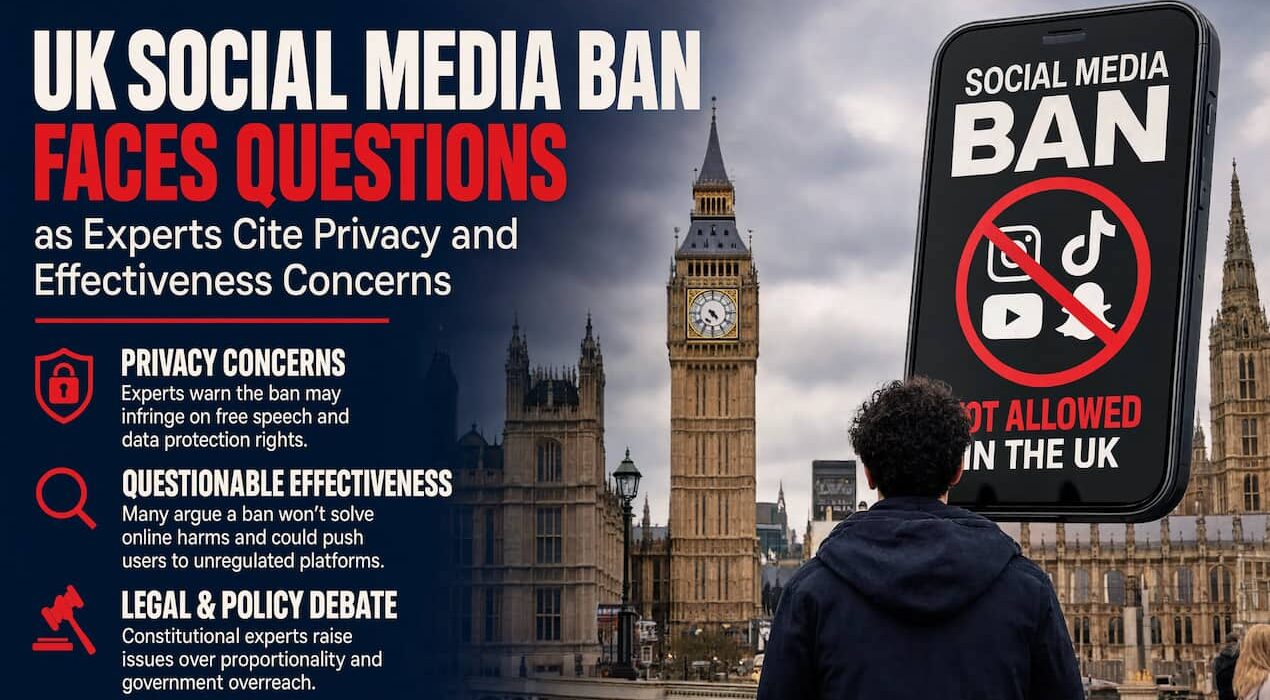
UK Social Media Ban Faces Questions as Experts Cite Privacy and Effectiveness Concerns
The UK social media ban is drawing mixed reactions from experts, parents, and young people. While supporters believe it will improve online safety, critics argue the policy may fail to achieve its goals.
The government plans to restrict access to platforms such as Instagram, TikTok, Snapchat, and YouTube for users under 16. Officials say the move will reduce harmful content exposure and improve young people’s wellbeing. However, recent findings from Australia raise concerns about whether such restrictions can work effectively.
Australia’s Experience Raises Questions
Australia introduced a similar policy aimed at limiting social media access for younger users. Yet studies found that many teenagers continued using social platforms despite the restrictions. In several cases, platforms had not actively enforced age verification requirements. Research also showed that only a small number of teenagers used VPN services to bypass restrictions. Instead, many retained access because existing accounts remained active. As a result, experts argue that enforcement remains a major challenge.
Privacy advocates have also expressed concern. Many believe stronger age verification measures could require users to share more personal information online. Critics warn that this may increase security risks for both children and adults.
Experts Call for Alternative Solutions
Several child safety organizations support stronger online protections but question whether a blanket ban is the best approach. They argue that technology companies should focus on safer platform design and stronger moderation systems. Some experts recommend improving parental controls and increasing digital literacy education. Others suggest limiting harmful recommendation algorithms that can repeatedly expose young users to dangerous content.
Teenagers themselves remain divided. Some worry about losing contact with friends and online communities. Others believe the restrictions could encourage healthier habits and more face-to-face interaction.
The debate continues as the UK prepares to implement the policy. For now, experts agree on one point: protecting children online remains essential. However, many believe long-term success will depend on balanced solutions that address safety, privacy, and education together.