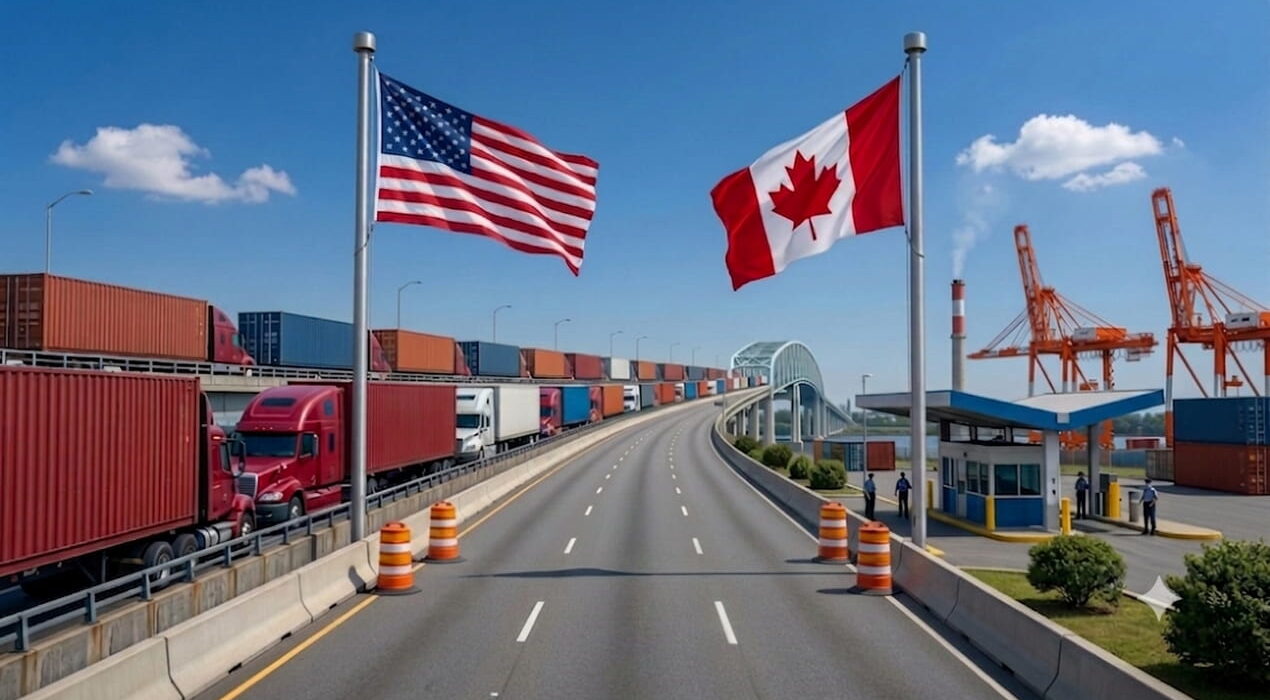
US Canada Tariffs 50% New Trade Clash Targets $20 Billion Goods
The US Canada tariffs dispute has escalated sharply this week. The United States announced new 50% duties on Canadian imports. As a result, tensions between the two neighbors are rising again. President Donald Trump introduced tariffs on about $20 billion worth of goods. These include wine, dairy, cement, and hockey equipment. In addition, the policy will take effect on August 19.
Why the US Took This Step
The US government says Canada treats American products unfairly. Therefore, it used Section 338 of the 1930 Tariff Act. This law allows up to 50% tariffs on countries seen as discriminatory. Notably, this is the first known use of this law in decades. Officials believe Canada imposed limits on US cars, alcohol, and dairy goods. As a result, Washington decided to respond strongly. The tariffs will cover nearly 5.2% of total US imports from Canada. This equals a significant share of the $382 billion trade volume recorded in 2025.
Canada Responds to Tariff Move
Canada has pushed back against the decision. Prime Minister Mark Carney said his country had offered fair solutions. However, he argued that earlier US tariffs violated trade agreements. He also warned that the dispute could increase costs for families. In addition, Canada remains open to talks for mutual benefits. Still, the situation shows no quick resolution. The US has ongoing trade talks with Mexico but excluded Canada. Meanwhile, tensions have grown due to past tariff battles. For example, Canadian provinces restricted US alcohol sales. Experts say these new measures could worsen global trade conflicts. Historically, similar policies deepened economic crises. Therefore, analysts urge caution moving forward. Some goods will remain exempt, including energy and critical minerals. However, many industries could face higher costs. As a result, businesses and consumers may feel the impact soon.
Historical Context and Concerns
Section 338 dates back to the Great Depression era. Economists believe earlier tariff hikes worsened global conditions. Therefore, its use today raises concerns among experts. Trade specialists also question the policy’s fairness. They argue it may go against modern trade principles. Even so, the US continues to defend its stance.