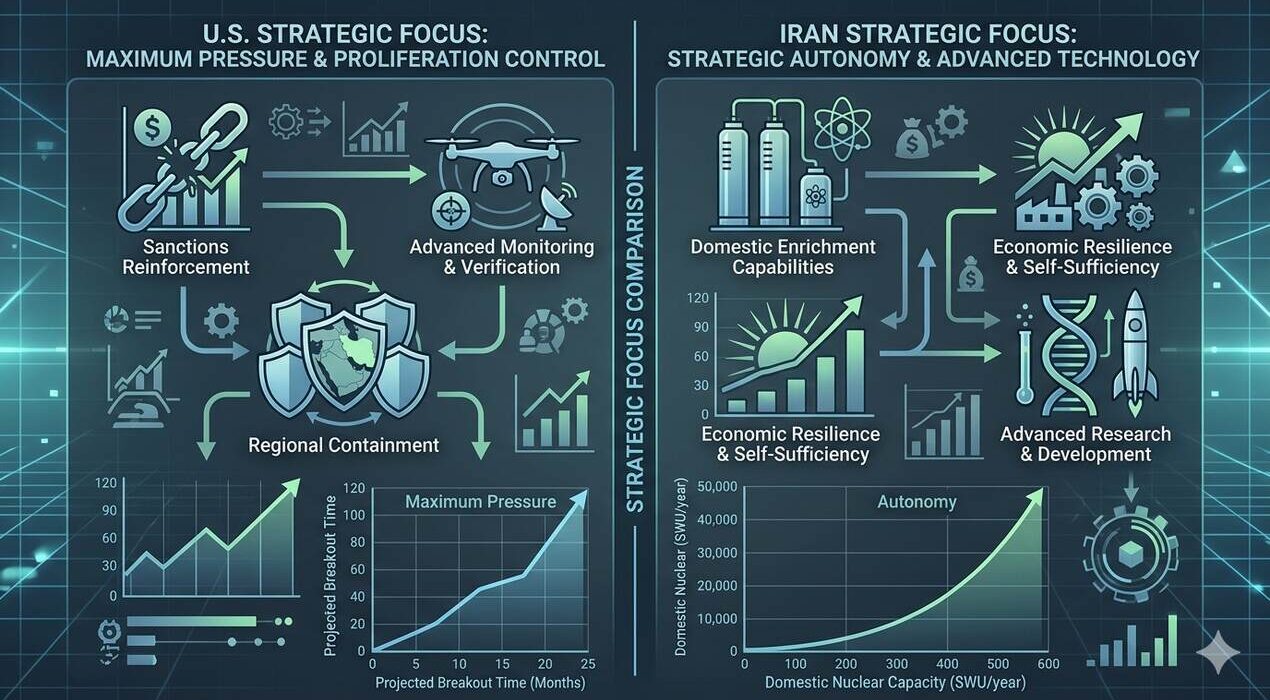
US-Iran MoU: A New Nuclear Deal Compared
The new 14-point Memorandum of Understanding (MoU) between the US and Iran has sparked intense debate. Critics question what the agreement includes and, perhaps more importantly, what it leaves out. Many are asking how it could affect economic sanctions and access to the vital Strait of Hormuz.
Comparisons with the 2015 Joint Comprehensive Plan of Action (JCPOA) are inevitable. Trump withdrew from the Obama-era nuclear agreement during his first term. To understand the current situation, it is important to examine three distinct periods.
From JCPOA to Ceasefire
During the JCPOA years (2016–2018), Iran significantly limited its nuclear programme. In return, the US lifted many economic sanctions. However, the agreement did not address Iran’s missile programme or regional proxy activities. Trump argued that the deal was insufficient and withdrew from it.
Before the conflict began on 28 February 2026, tensions were extremely high. The US had reimposed severe sanctions and maintained strict naval restrictions. As a result, shipping through the Strait of Hormuz faced significant disruption.
What the New MoU Entails
The newly signed MoU marks a dramatic shift. The ceasefire agreement permanently ends military operations on all fronts. Importantly, the US will begin easing naval restrictions immediately, with all measures scheduled to be removed within 30 days. In addition, Iran will ensure safe passage for commercial vessels through the Strait.
Nevertheless, the MoU leaves several critical issues unresolved. For instance, it provides only a 60-day framework for negotiating a final nuclear agreement. While Iran reaffirms that it will not develop nuclear weapons, specific commitments remain subject to future talks. The agreement also proposes a $300 billion reconstruction fund for Iran. However, the US has not committed to directly financing the initiative. As a result, the success of the US Iran MoU deal will largely depend on the outcome of the upcoming negotiations.