Japan Defence Shift Now: Koizumi’s Warning
In an exclusive interview with the BBC, Japan’s Defence Minister Koizumi argued that strengthening the country’s military capabilities is essential for maintaining regional stability. He stated that Japan must build stronger deterrence through a multi-layered defence strategy.
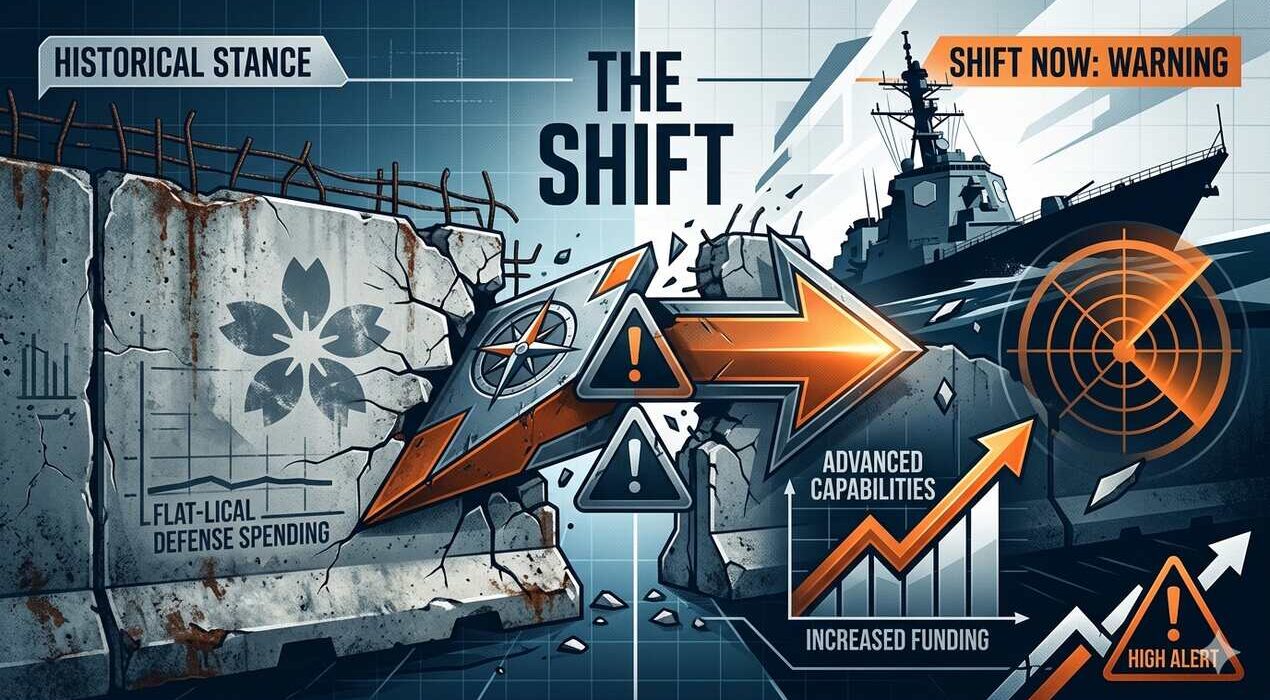
The position represents a significant shift from the pacifist approach adopted after World War Two. According to the minister, increasing defence capabilities can help prevent future conflict rather than encourage it.
New Export Rules
Japan recently relaxed its long-standing arms export restrictions. For the first time in 50 years, the country can export lethal military equipment. The United States and the United Kingdom are among the 17 approved destinations. This marks a major departure from post-war policy, under which only non-lethal equipment could be exported.
Growing Global Demand
Australia has selected Japanese warships, while the Philippines is discussing the acquisition of used destroyers. Indonesia is also engaged in advanced negotiations, and New Zealand has expressed interest as well. These countries regard Japanese technology as reliable and effective. They also seek stronger maritime security throughout the Pacific region.
However, critics have raised concerns about the pace of rearmament. The defence minister insists that strengthening the alliance with the United States remains essential. He believes that expanding cooperation with like-minded partners enhances regional security. The minister also defended the easing of export restrictions. According to him, these measures are intended to strengthen deterrence rather than promote aggression.
He emphasised that Japan does not seek confrontation. Instead, the country aims to safeguard its borders and contribute to regional stability. He also warned that failing to respond to growing security challenges could create greater risks. North Korea’s continued missile tests, for example, highlight the changing threat environment.
The minister’s position reflects a clear break from longstanding policy. While acknowledging the historical sensitivities surrounding military expansion, he argues that strategic circumstances have evolved significantly. He believes Japan should play a larger role in international security and deepen cooperation with its partners.
As a result, the country’s defence industry could experience substantial growth in the coming years. Ultimately, the government’s objective is to preserve stability and prevent conflict. The strategy combines stronger deterrence with continued diplomatic engagement. According to the minister, this balanced approach offers the best path forward.