US-Iran Peace Agreement Takes Effect After Islamabad MoU Signing
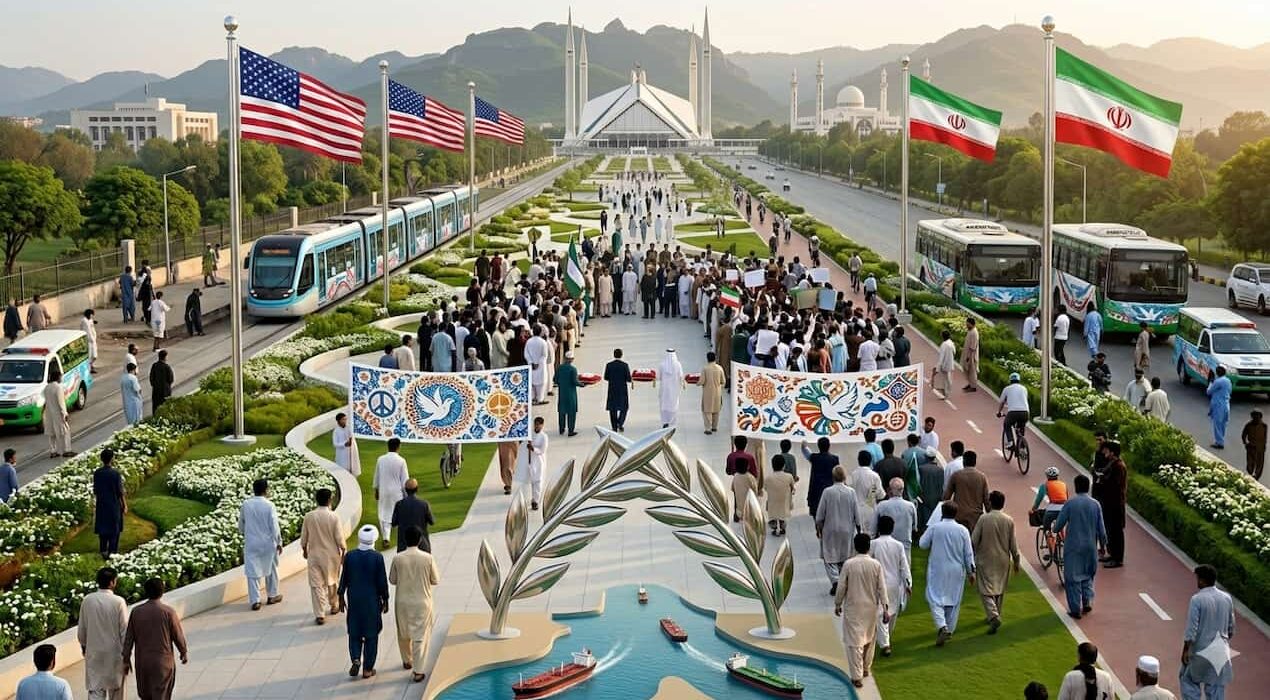
The US-Iran peace agreement entered into force on Thursday after leaders from both countries signed the Islamabad Memorandum of Understanding (MoU). Prime Minister Shehbaz Sharif announced the development and called it a major diplomatic breakthrough. He said the agreement reflects a shared commitment to resolving conflict through dialogue and cooperation.
In a post on X, the prime minister stated that the presidents of the United States and Iran signed the memorandum electronically. He also endorsed the agreement as a mediator. According to him, the deal marks the first step towards lasting peace and stability in the region.
Agreement Brings Immediate Measures
The agreement includes several immediate actions. Iran will reopen the Strait of Hormuz, a key global shipping route. At the same time, the United States will lift its naval blockade on Iranian ports.
US President Donald Trump signed the memorandum after attending a dinner at the Palace of Versailles following the G7 summit. Meanwhile, Iranian Foreign Ministry spokesman Esmaeil Baqaei confirmed that President Masoud Pezeshkian also signed the document. As a result, both governments formally approved the agreement.
Pakistan initially planned to host an official signing ceremony in Switzerland. However, officials later cancelled the event because both leaders had already signed the document electronically. Nevertheless, Switzerland will host technical-level talks between the two sides.
Pakistan Welcomes Diplomatic Success
Prime Minister Shehbaz congratulated President Trump for supporting diplomacy and peaceful engagement. He also praised the efforts of US officials, negotiators and regional partners who contributed to the agreement. In addition, he acknowledged the support of Qatar, Saudi Arabia, Türkiye and Egypt.
The prime minister highlighted the role of Pakistan’s diplomatic team and Field Marshal Asim Munir in facilitating dialogue. He said their efforts helped advance peace and regional stability. President Asif Ali Zardari also welcomed the agreement and described it as a historic achievement. He noted that the conflict had disrupted energy supplies, trade and economic activity. Therefore, he urged all parties to implement the agreement fully.
The deal also provides for the easing of oil sanctions on Iran. Furthermore, Iran will reduce its enriched uranium stockpile under international supervision as negotiations continue toward a final nuclear agreement.