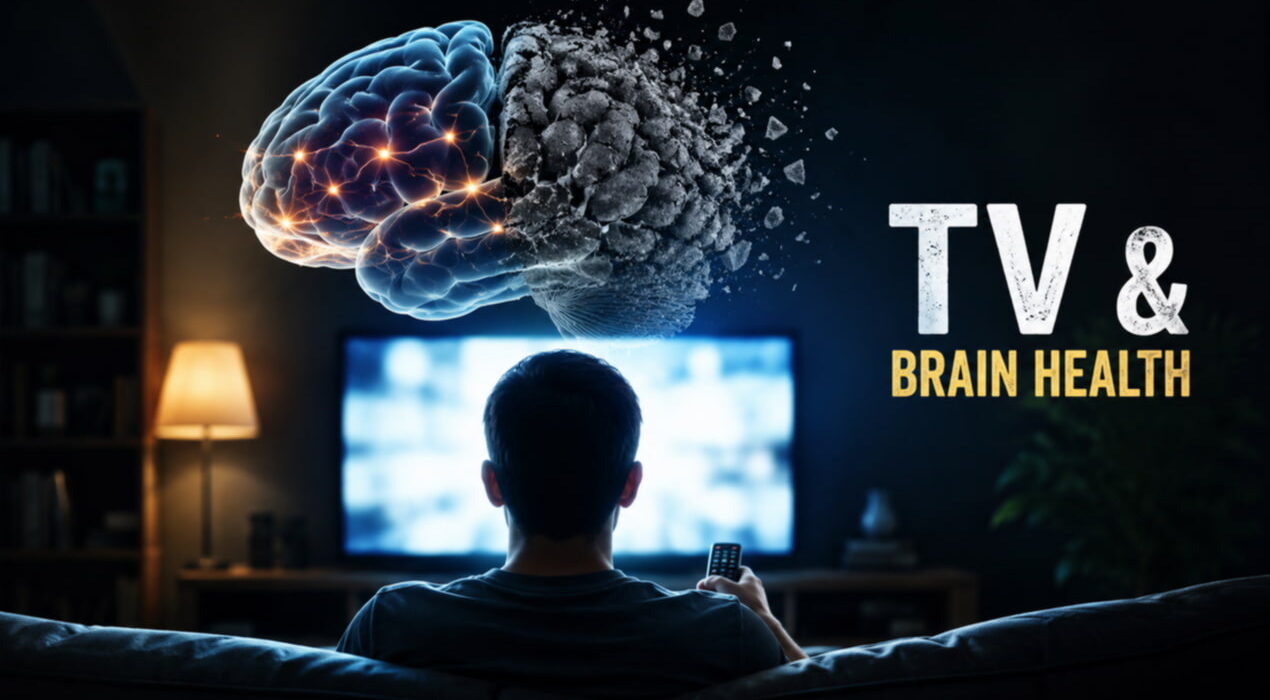
Watching Too Much TV May Harm Brain Health, Long-Term Study Finds
Spending hours watching television may affect brain health more than many people realise. A new study suggests that TV brain health could decline when people spend long periods watching television during midlife. However, the same risk was not seen in people who spent similar time doing mentally active desk work.
Researchers followed more than 1,700 adults for almost 24 years. They found that men who frequently watched TV had smaller brain regions linked to Alzheimer’s disease and more signs of brain damage associated with cognitive decline. Interestingly, physical activity did not change these findings.
TV Watching and Brain Changes
Scientists analysed data from participants in the long-running ARIC study. Volunteers reported how often they watched television and how much they sat at work. Around 24 years later, researchers examined their brains using MRI scans.
The results showed that television watching, a mentally passive activity, was linked to poorer brain health in men. In contrast, people who spent long hours sitting at work had healthier brain structures. Office tasks often involve reading, planning, writing, and solving problems. Therefore, these activities may help build cognitive reserve, which protects the brain as people age.
Why Men and Women Showed Different Results
Researchers were surprised that the findings mainly affected men. They believe lifestyle habits, hormones, and sitting patterns may explain the difference. For example, women may interrupt their sitting more often, while men may watch television for longer without breaks.
However, the study cannot prove that television directly caused the brain changes. Participants also estimated their own screen time, which may reduce accuracy. In addition, factors such as snacking, alcohol use, or napping while watching TV may have influenced the results.
Keep Your Brain Active
Experts say the findings highlight the importance of mentally engaging activities while sitting. Reading, puzzles, crafts, or even problem-solving games may help keep the brain active. As a result, taking regular breaks and reducing long TV sessions could support better TV brain health as people grow older.