Campus education strain rises in Karachi universities amid protests
The campus education strain is rising in Karachi’s public universities. Teachers, staff, and students face repeated disruptions. As a result, academic schedules and exams continue to suffer. The situation reflects deeper funding and governance issues in the higher education system.
Funding Gaps and University Disruption
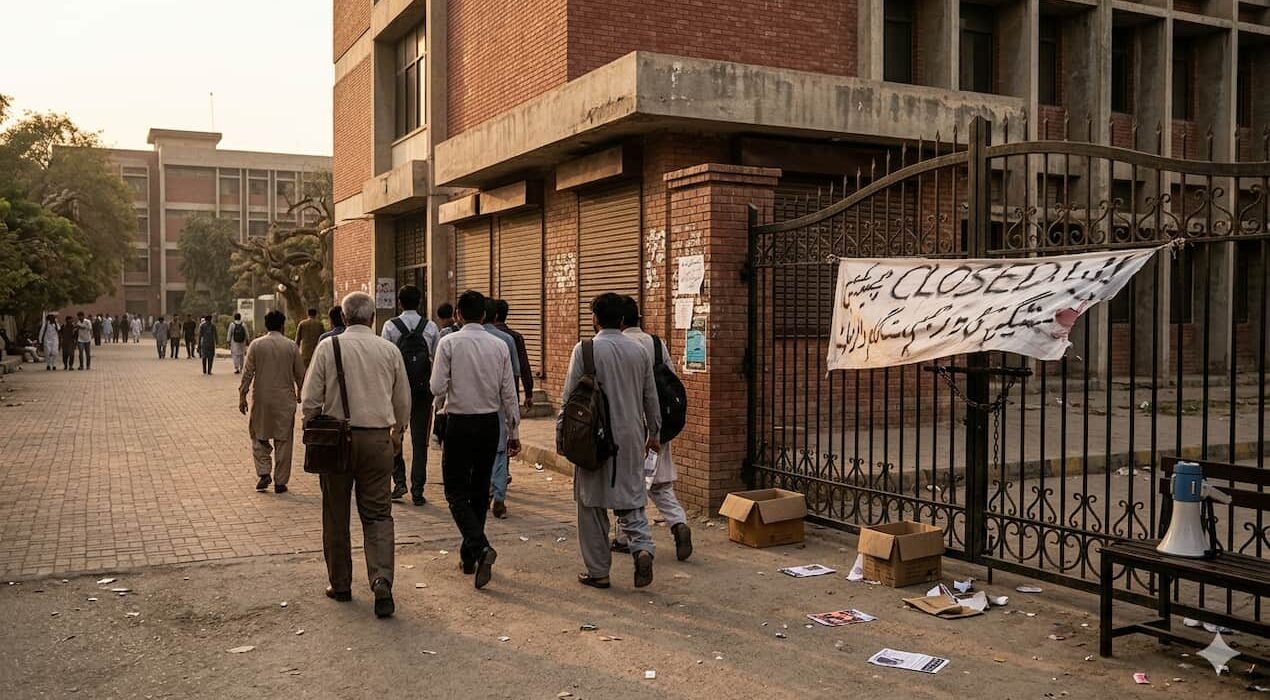
At Karachi University, faculty and non-teaching staff recently suspended an exam boycott. They acted after receiving government assurances about pending payments. The protest lasted over a month and stopped academic activity in many departments. Teachers demanded clearance of dues and allowances linked to examination work.
However, the problems are not fully resolved. Authorities promised relief measures, but implementation remains slow. Therefore, staff concerns continue to rise. Financial delays also affect administrative operations and academic planning.
At the same time, students joined protests in several departments. They demanded clear exam schedules and fair assessment methods. In addition, some student groups called for alternative evaluation options during uncertainty. At FUUAST, teachers also boycotted exams due to unpaid salaries and suspended pensions. This shows that the crisis is not limited to one campus.
Growing Student and Faculty Pressure
This pattern highlights a wider structural issue in public universities. Funding shortages and reliance on self-finance systems increase pressure on institutions. Consequently, universities struggle to maintain stable academic calendars.
Students now express stronger concern about academic uncertainty. Faculty members also demand timely salaries and better financial support. In addition, weak coordination between authorities slows decision-making and increases frustration.
Experts warn that repeated disruptions damage trust in public education. However, they also note growing awareness among students and staff. Many now call for long-term reforms in funding, governance, and accountability.
Therefore, policymakers must address both financial and administrative weaknesses. Otherwise, campus instability may continue and affect future learning outcomes across Karachi universities.