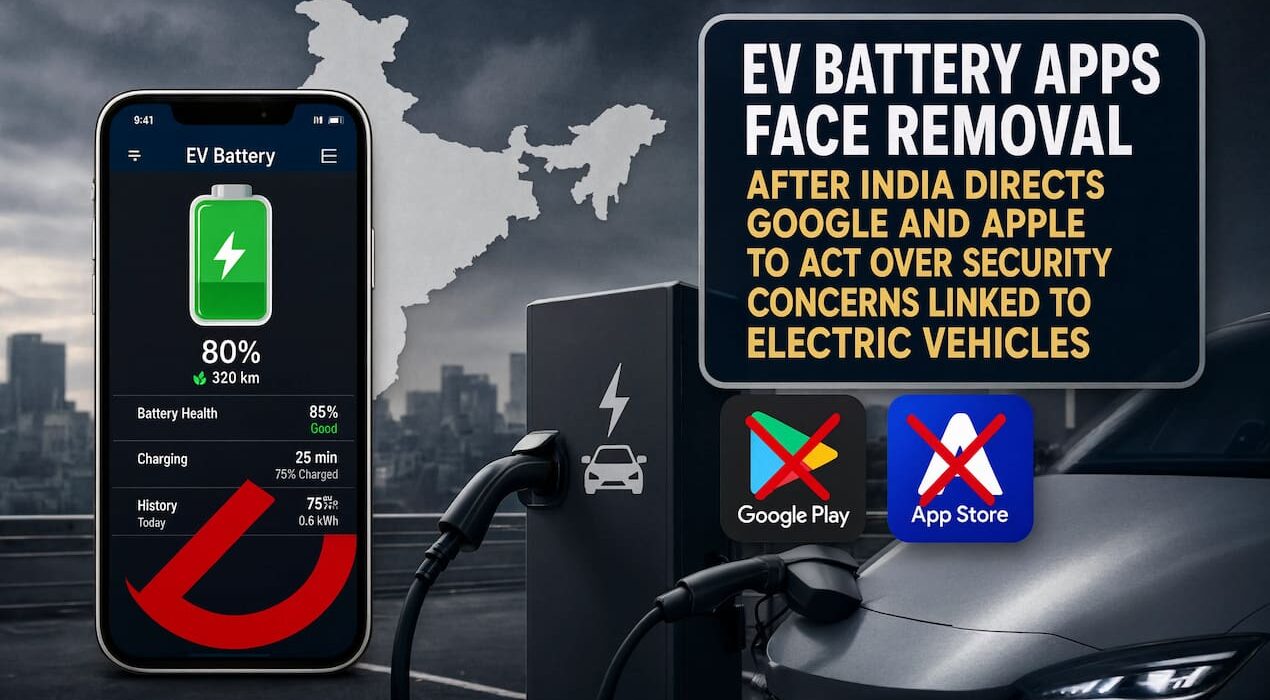
Google Removes EV Battery Apps After India Flags Security Risks
India has asked Google and Apple to remove several EV battery apps from their app stores. Officials raised concerns after viral videos showed e-rickshaws being switched off through smartphone applications. The move aims to improve public safety and strengthen cybersecurity.
The Ministry of Electronics and Information Technology identified apps such as BAT-BMS, SMART BMS, and LOSSIGY. Authorities also continue reviewing four other battery management apps. However, officials stressed that battery monitoring apps are not illegal.
Security Concerns Behind the Decision
Battery management apps help users track charging, voltage, temperature, and battery health. Many electric vehicle owners rely on these tools every day. However, weak Bluetooth security can create serious risks.
Some battery systems lack proper passwords or authentication. As a result, unauthorized users could interfere with battery functions. Officials believe stronger security measures can prevent this type of misuse.
The investigation started after social media clips gained attention across India. The videos appeared to show people remotely disabling e-rickshaws using mobile apps. Therefore, authorities acted quickly to reduce potential threats.
Drivers depend on their vehicles for daily income. Even a short disruption can affect earnings and inconvenience passengers. For this reason, officials encourage owners to install only apps provided by trusted battery manufacturers. The government also plans to examine additional applications. Developers may need to improve security before their software returns to app stores. Meanwhile, Google and Apple are expected to cooperate with the government’s request.
Experts recommend enabling passwords, secure authentication, and software updates for connected battery systems. These simple steps can reduce security risks while allowing owners to continue using useful monitoring features. As electric vehicle adoption grows, stronger digital protection will become increasingly important for drivers, manufacturers, and the wider transport industry.