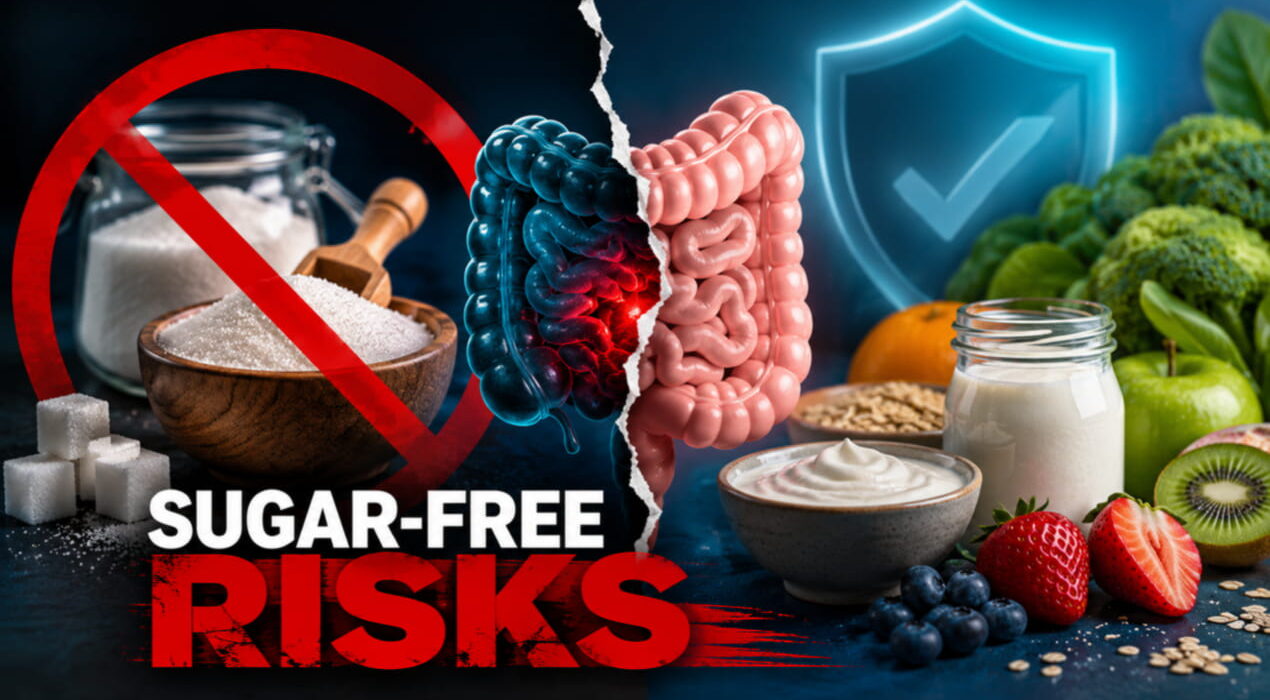
Sugar-Free Diet Risks: New Study Warns of Hidden Gut Health Problems
Many people believe a sugar-free diet risks nothing but brings better health. However, a new animal study suggests that cutting out every trace of sugar could harm the gut. Researchers found that mice on a strict zero-sugar diet developed metabolic problems despite staying slim. The study involved only six mice in each group, so the findings do not directly apply to people. Still, the results highlight the importance of a balanced diet instead of extreme eating habits.
Gut Health Depends on Balance
Researchers discovered that beneficial gut bacteria need natural carbohydrates to survive. These microbes produce substances that protect the gut lining and help the body control blood sugar. In addition, they support healthy digestion and immune function. When the mice received no sugar, helpful bacteria declined quickly. As a result, harmful microbes increased and damaged the gut barrier. This process, often called a leaky gut, may trigger inflammation throughout the body. Although the mice maintained a healthy weight, their metabolism became less effective. Therefore, body weight alone may not reflect overall health.
What the Findings Mean
Experts stress that this research used mice, not humans. Moreover, the animals followed a very low-fat diet, unlike the eating habits of most people. Reducing added sugar in processed foods remains a healthy goal. However, removing every source of natural sugar may not benefit the gut. Instead, choose a wide variety of fruits, vegetables, whole grains, and other fibre-rich foods. These foods nourish beneficial bacteria while providing essential nutrients.
Simple Steps for Better Gut Health
If you previously followed a strict low-sugar diet, consider rebuilding your gut microbiome. For example, include fermented foods such as kefir, live yoghurt, or sauerkraut. Also, eat plenty of colourful plant-based foods each day. A balanced diet supports gut bacteria, strengthens digestion, and promotes long-term health better than extreme food restrictions.