University Funding Crisis Disrupts Education Across Karachi Campuses
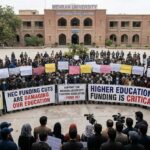
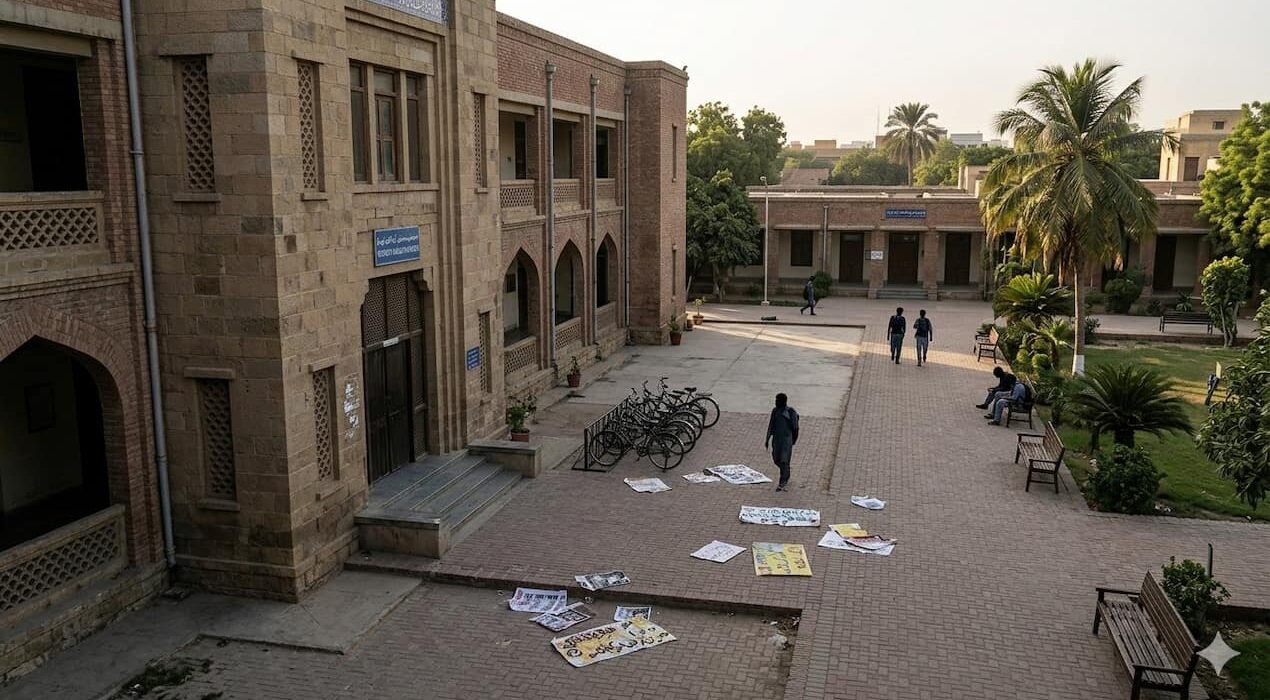
The University Funding Crisis has once again disrupted academic activities at Karachi’s public universities. Recent protests by teachers, staff and students have highlighted serious financial and governance issues. Many stakeholders believe the problems go beyond delayed payments. Instead, they point to long-term underfunding and policy failures that continue to affect higher education across Pakistan.
Financial Disputes Trigger Academic Disruptions
The latest unrest emerged at Karachi University, where teachers and non-teaching staff suspended a month-long boycott of semester examinations. They resumed duties after receiving assurances from the Sindh government regarding pending financial payments. Before the agreement, invigilators, paper setters and administrative employees refused to participate in examination activities.
Faculty representatives argued that authorities had delayed salaries, allowances and payments linked to examination duties and evening programmes. As a result, academic activities suffered significant disruption. Although the government has promised to address some of these concerns, many stakeholders remain cautious. They believe temporary solutions will not solve the deeper financial challenges facing universities.
Students have also joined the debate. Several student groups criticized examination uncertainty and administrative delays. In addition, some students demanded alternative assessment methods. Their participation reflects growing frustration with an academic system that frequently faces interruptions.
Calls Grow for Structural Higher Education Reforms
A similar situation developed at the Federal Urdu University of Arts, Science and Technology (FUUAST). Teachers there also boycotted examinations over unpaid salaries, pensions and allowances. Consequently, academic continuity became vulnerable to financial disputes once again.
Experts argue that these recurring crises stem from broader changes in higher education governance. Public universities increasingly rely on self-generated revenue while government support struggles to keep pace with rising costs. Therefore, institutions face mounting pressure to maintain services with limited resources.
The result has been delayed payments, higher tuition fees and strained infrastructure. Furthermore, repeated disruptions affect students’ learning and future plans. The growing alliance between students and faculty members signals increasing demand for accountability and reform. Unless policymakers address the University Funding Crisis through sustainable financing and governance reforms, academic instability is likely to continue across public universities.